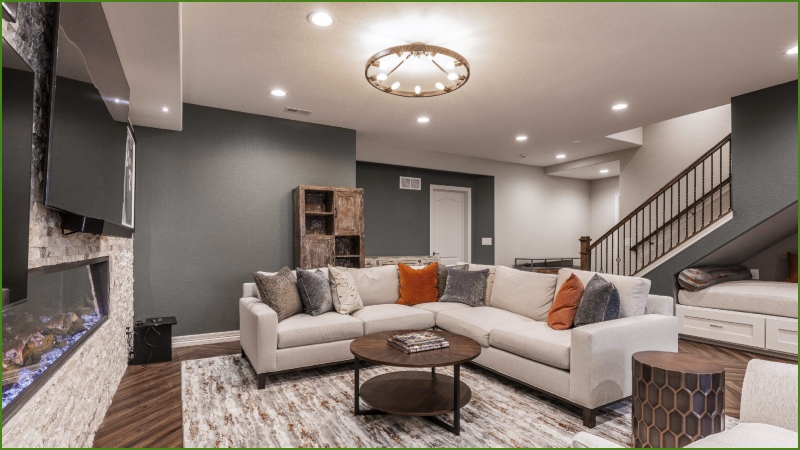
Basement Remodel Ideas. Like, genuinely strange rooms. Most people use them as a place to put things they don’t want to deal with — broken chairs, old textbooks, holiday decorations from a holiday they don’t even celebrate anymore. My neighbor has a treadmill down there that hasn’t moved since 2017. Still has a shirt draped over it.
Point is, nobody’s using these spaces the way they could be. And that’s kind of a waste when you think about it — it’s already part of your house. Already yours. Already there.
The good news is that with some actual planning, not just vibes and a Pinterest board, these spaces can become genuinely great rooms. People do it all the time. Some spend a lot, some spend almost nothing. What the successful ones have in common isn’t budget — it’s that they figured out what they wanted before they started.
First Thing: Know What You’re Building Basement Remodel Ideas
Seriously, don’t skip this part.
The number of basement renovations that go wrong because someone just started buying stuff without a plan — it’s a lot. More than you’d think. They get excited, they pick out a couch, and then three weeks later they’re standing in a room that doesn’t quite work and they can’t figure out why.
So. Before anything else. What do you need this room to actually do?
A few questions worth sitting with:
- Daily use or just weekends and holidays?
- Family space or somewhere to actually be alone for once?
- Are guests going to sleep down here?
- How much storage still has to live in the basement?
- Does resale value matter to you, or is this purely about your own life?
One clear purpose. That’s the goal. You can add layers — a lounge with a desk tucked in the corner, a gym that also has some shelving — but pick one main thing and let everything else support it. Seriously makes the decisions easier.
Lighting. Just — Lighting. Basement Remodel Ideas
Here’s the thing about basement lighting that people get wrong constantly. They think more light equals better. So they put in one very bright overhead fixture and wonder why the room still feels depressing.
Brightness isn’t the problem. Quality is.
You want layers. Multiple sources. Different heights. Warm bulbs — around 2700K, not the cool bluish ones. Cool bulbs make a basement feel like a break room at a dentist’s office. Warm bulbs make it feel like somewhere a human being might want to spend time.
If your ceiling is low — and a lot of basements have low ceilings — recessed lights are really the only good option. Hanging fixtures in a seven foot ceiling are just things to walk into. Recessed lights sit flush, spread light evenly, and don’t eat your headroom.
Floor lamps. Table lamps. People skip these and then can’t figure out why the room feels flat. Overhead lighting gives you even brightness with no warmth. Lamps create actual atmosphere. You need both.
Windows — protect them. If there are any windows down there, even small weird ones near the ceiling, don’t block them. Don’t cover them with heavy curtains. Natural light is doing heavy lifting in a basement even when you can barely see it.
The Basement Lounge Thing
This is the most common direction and honestly a good one. The basement lounge can be the room in your house that has no rules. Louder. More relaxed. Nobody cares if someone puts their feet on the furniture. Movie nights, gaming, watching the game on Sunday — all of it just works down there in a way it doesn’t in a more formal living room.
To make it actually comfortable rather than just technically furnished:
- Seating that’s genuinely oversized. Not “living room big.” Sectional big.
- Rugs, cushions, throw blankets — textures everywhere. Makes it feel used and welcoming.
- Warm wall colors. Sterile white down there looks terrible.
- Hidden storage built into the room so surfaces don’t become default dumping grounds.
- A TV that’s actually sized for the room. Or a projector. Either works.
One layout thing that helps a lot — if the space feels narrow, push furniture to the walls. Don’t float it in the middle. Floor space opens up and the room reads bigger.
Small Basement Doesn’t Mean Bad Basement
Smaller spaces force you to make better choices. When there isn’t room to just fill a space with furniture, you have to think. And honestly that usually produces better results than having unlimited room to work with.
The mistake people make in small basements is trying to divide it into too many separate areas. Office here, lounge there, storage in the corner — and suddenly every zone is too small to actually use properly. Open layouts almost always work better.
Multi-purpose furniture is your friend down here. Storage ottomans. Sleeper sofas for when guests come. A fold-down desk that disappears into the wall when you’re not using it. Every piece pulling double duty.
Light colors. Warm whites and soft grays. Not because it’s magic but because light bounces off lighter surfaces and the room ends up feeling less dense.
Wall-mounted shelving instead of floor units. Floor space in a small basement is too valuable to spend on furniture legs.
The Unfinished Basement Question
Exposed pipes everywhere. Bare concrete. Insulation stuffed between joists. It looks genuinely rough and it’s hard to picture it turning into anything good.
But here’s the thing — unfinished basements are actually the easiest to work with. Nothing is set. Nothing has to stay the way it is. That’s a genuine advantage.
Before doing anything big, there are smaller moves that immediately shift how the space feels:
Paint the ceiling dark. Charcoal or black. Sounds counterintuitive but it works — everything above eye level suddenly looks intentional instead of unfinished. Kind of industrial. People do double-takes.
Rugs on the concrete. Concrete is cold, hard, and visually harsh. An area rug solves all three of those problems at once and costs almost nothing relative to the impact.
Just organizing it helps more than you’d expect. Chaos looks unusable. Some basic shelving, things put where they belong — the space starts to read as potential instead of problem.
When you have budget for it, drywall and insulation are the two changes that transform everything. Temperature, sound, feel. The whole thing shifts.
Working From Home Down There
A lot of people discovered during the last few years that their home genuinely wasn’t set up for working from home. Kitchen table. Corner of a bedroom. Couch with a laptop balanced on your knees. None of it is actually a workspace.
Basements solve this in a pretty clean way. Separated from the rest of the house. Quieter. You can have something that actually feels like going to work, just without the commute.
What the space needs — not a lot, actually:
- A real desk chair. Not a dining chair. Your back will send you a message around hour three.
- Task lighting that doesn’t create glare on the screen.
- Storage. Somewhere for things to go that isn’t the desk surface.
- Rugs and curtains to absorb some of the echo — basements can be surprisingly loud acoustically.
- A clean background for video calls. Just a wall. That’s all anyone needs.
Built-in desks are worth considering because they attach to the wall and don’t need legs taking up floor space underneath.
Media Room Setup Basement Remodel Ideas
Basements have a built-in advantage for home theaters that people don’t always realize. They’re already darker than the rest of the house. That’s the feature. Sunlight constantly fighting your TV is a living room problem. A basement doesn’t have it.
Core of it: a screen that’s actually big enough, sound that fills the room, seating you can stay in for two hours without getting uncomfortable. That’s it. Everything else is just making it nicer.
For the atmosphere side of things:
- Soft fabrics — microfiber, velvet, anything with texture
- Dimmable lights so you’re not stuck choosing between full brightness and complete darkness
- Some warm wood tones so it doesn’t feel like a cave
- Blackout curtains if windows are present
- A real rug. Absorbs sound, warms the room, makes it feel finished.
Doing This Without Going Broke Basement Remodel Ideas
Meaningful improvements don’t require a contractor or a large budget. They require doing things in the right order.
Paint first. Every time. It’s the cheapest high-impact change that exists. Walls, ceiling, exposed pipes, beams — all of it. Fresh paint makes everything that comes after look better. Boring advice. Still correct.
Then flooring. Luxury vinyl plank is the go-to for basements — handles moisture, looks good, doesn’t cost what hardwood would. DIY installation cuts the cost down significantly.
Then lighting. Swapping fixtures is a weekend project. New ones don’t need to be expensive to be noticeably better than old ones.
Then decor last. Mirrors, some art, textured fabrics. Room starts to feel done.
One section at a time. Seriously. Finish something before starting the next thing. It stays manageable and you make better decisions.
What’s Working in Design Right Now Basement Remodel Ideas
Simpler. That’s the short answer. Cleaner. More intentional. The basement loaded with stuff from every era of your life looks exhausting now.
Warm neutrals are winning — soft whites, earthy tones, muted greens, charcoal. They work well in lower light and they don’t feel cold.
Mixed materials. Wood with metal. Fabric beside concrete. Texture creates interest without needing loud colors or busy patterns.
Open layouts wherever possible. Walls only where they’re structurally required. Long sightlines make rooms feel significantly bigger.
Hidden storage. Cabinets that blend into the wall, ottomans with lids, under-stair drawers. Organized without making storage the whole personality of the room.
Matte black hardware. On everything. Fixtures, handles, frames. Works with warm tones, cool tones, wood, concrete — almost nothing fights it.
Moisture First. Before Everything. Basement Remodel Ideas
This is the part that matters most and that people most want to skip over because it’s not exciting.
Moisture ruins basements. Full stop. Doesn’t matter what you build, what you spend, how careful you are with installation. If water is getting in, or humidity is high enough, it will eventually destroy whatever is down there. Mold. Warping. Structural damage. You do not want to learn this after the drywall is up.
Before any renovation:
- Go around the foundation walls and floor. Cracks, staining, any signs of past water coming in.
- Check humidity levels. If they’re consistently high, a dehumidifier is not optional.
- Is there ventilation? Is it actually working?
- When was insulation and drainage last looked at?
Deal with this first. It’s dramatically cheaper before the walls are closed than after.
Guest Room in the Basement
A basement guest room gives visitors their own actual space — private, separated from where everyone else sleeps, with some real quiet. It works well and it adds functional value.
What it needs to work properly:
- Warm lighting, not just a single overhead
- Real temperature control, because basements can get genuinely cold
- Sound insulation — guests should be able to sleep without hearing everything
- An egress window if your local code requires one, which many do for sleeping rooms
Soft bedding, warm light, neutral colors. That’s what makes it feel chosen rather than accidental.
A bathroom nearby makes a real difference. If the layout allows even a half bath close to the guest room, do it.
You Still Need Storage
Even a beautifully finished basement needs somewhere for things to go. The goal isn’t getting rid of storage — it’s planning it so the room doesn’t gradually become a mess again six months after you finish.
Options that don’t take over the room visually:
- Built-in cabinets that look like they’re part of the wall
- Wall shelving for things worth seeing — books, plants, speakers
- Under-stair space. Almost always wasted. Almost always useful.
- Storage benches
- Furniture with hidden compartments
Without planned storage, things pile up on surfaces. Not because anyone is being careless — just because there’s nowhere else for stuff to go.
Flooring That Actually Makes Sense Down Here
Different rules than the rest of the house. Moisture changes the calculus on almost every material.
| Flooring | Why It Works |
|---|---|
| Luxury Vinyl Plank | Moisture-resistant, durable, looks like wood |
| Tile | Fully waterproof, needs rugs for comfort |
| Engineered Vinyl Tile | Comfortable, affordable |
| Carpet Tiles | Soft, warm, replaceable in sections |
| Polished Concrete | Low maintenance, suits modern spaces |
Lounges and bedrooms — go softer. Gyms and utility areas — go harder and more durable.
Make It Feel Like the Same House
A basement that feels completely disconnected from the rest of your home is a subtle but real problem. You walk down there and it feels like a different place. That disconnect is hard to name but easy to feel.
Some continuity fixes it:
- Match floor tones even if the materials are different
- Repeat one wall color from upstairs somewhere down here
- Same hardware finish throughout
- Furniture styles that are at least in the same general family
- Decor as a continuation, not a fresh start
When it flows with the rest of the house, it just feels right.
Last Thing
A basement that people actually use comes from decisions made at the beginning. What’s it for. What problems need solving first. Everything else follows from that.
Budget matters less than clarity. Figure out what you need, deal with moisture before anything else, and do one thing at a time.
That room downstairs has been waiting. Might as well finally do something with it. Visit prolivinginsight.com for more information