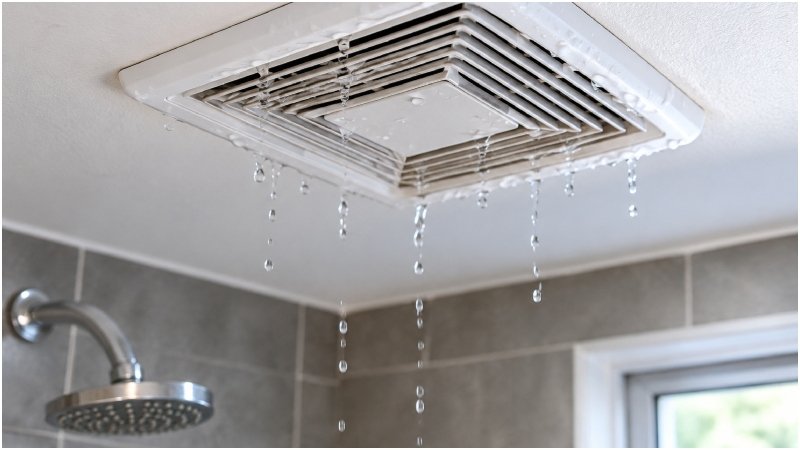
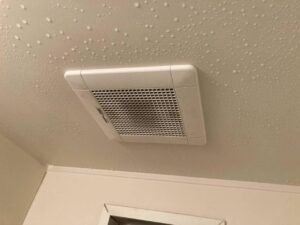
Bathroom Fan Dripping Water. A bathroom exhaust fan should remove moisture from the room, not drip water back onto your floor. So, when you notice water coming through the fan cover, it is natural to wonder what went wrong. Is rain getting inside the vent, or is condensation building up somewhere in the duct?
The answer often depends on when you notice the leak. Water that appears after a hot shower may point to condensation. Dripping during a rainstorm could mean water is entering through the roof or exterior vent. Sometimes, the problem comes from poorly installed ductwork or a nearby plumbing leak.
Whatever the cause, don’t ignore it. Repeated moisture can stain your ceiling, damage building materials, and create conditions for mold growth. Replacing the fan without finding the source may not solve anything.
In this guide, you’ll learn why your bathroom fan is dripping water, how to identify the source, and which repairs can help prevent the problem from returning.
Why Is Water Dripping From My Bathroom Exhaust Fan?
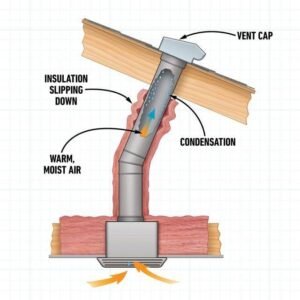
A bathroom exhaust fan moves warm, humid air through a duct and releases it outside. Water can appear around the fan when condensation collects inside that duct or moisture enters from another part of the building.
Here are seven possible causes to investigate.
1. Condensation Inside the Exhaust Duct
Condensation is a common reason for bathroom exhaust fan dripping water. It forms when warm, moisture-filled air meets a cold surface.
After a shower, warm air travels through the exhaust duct. If the duct passes through a cold attic or another unheated space, its interior surface may become cold enough for water vapor to turn into droplets.
Those droplets can collect along the duct walls. If the duct has low spots or an unsuitable slope, water may gather and eventually run back toward the bathroom fan.
This problem often becomes more noticeable during cold weather. However, condensation can happen whenever warm, humid air meets a sufficiently cold surface.
How to fix it: Inspect accessible duct sections for condensation, sagging, and exposed areas. Insulate ductwork that passes through unconditioned spaces. Also, check that the duct is properly supported and arranged so moisture does not collect or drain toward the fan.
2. Rainwater Entering Through the Exterior Vent
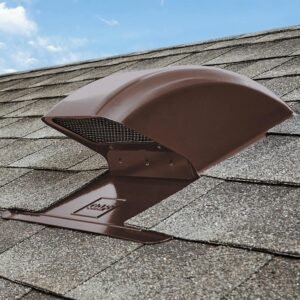
Does your bathroom fan leak during heavy rain? The exterior vent may be allowing water into the exhaust duct.
Bathroom exhaust ducts normally terminate through a roof or exterior wall. The opening needs a suitable vent cover that protects against weather while allowing air to escape.
A cracked vent hood, damaged flashing, loose connection, or missing protective cover can allow rainwater to enter. Wind-driven rain may also reach an exposed opening.
Once inside, water can travel along the duct and reach the fan housing.
How to fix it: Inspect the exterior vent from a safe location. Look for cracks, loose covers, damaged flashing, and signs of water entry. Have damaged roof connections repaired by a qualified roofer.
Never block the exhaust opening to stop rain. The fan still needs a clear path to release humid air outdoors. Home upgrading mintpalment
3. Improper Exhaust Duct Installation
Poor duct installation can create places where moisture collects instead of leaving the ventilation system.
For example, a flexible duct with sharp bends can restrict airflow. An unsupported section may sag and create a low point. Loose connections can also allow humid air to escape into an attic.
The duct route matters, too. A long or unnecessarily complicated route can reduce airflow and make condensation problems harder to manage.
How to fix it: Check accessible duct sections for loose connections, crushed areas, sharp bends, and sagging. The duct should be properly supported and sized according to the fan manufacturer’s instructions.
Where the system design requires it, the duct should slope toward the exterior termination so condensation does not drain back toward the fan. Avoid making changes without checking the installation requirements.
4. Poor Bathroom Ventilation
A bathroom that stays humid long after a shower may have an airflow problem.
The exhaust fan could be too weak for the room. Dust may be blocking the grille, or the duct may be restricting airflow. Sometimes, people simply switch the fan off too soon.
When humid air remains in the bathroom, moisture can collect on cooler surfaces and increase condensation inside the exhaust system.
How to fix it: Run the exhaust fan during showers and continue using it afterward. A timer or humidity-sensing control can make this easier.
Check the fan grille for dust and buildup. Also, make sure the fan has enough airflow capacity for the bathroom and that the duct is not blocked.
5. Uninsulated Ductwork in Cold Spaces
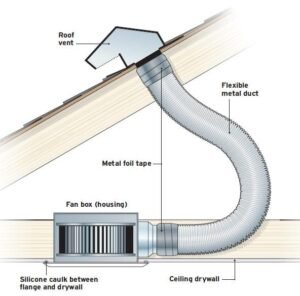
An exhaust duct that runs through an unheated attic can become very cold during winter.
When warm bathroom air passes through it, condensation may form along the inside surface. Water can collect inside the duct and eventually drip back through the fan cover.
This problem becomes more likely when long duct sections remain exposed to cold temperatures.
How to fix it: Use suitable duct insulation in unconditioned spaces. Make sure the insulation covers the duct properly and does not have large gaps or compressed sections.
Also, check the duct connections for air leaks. Insulation helps reduce condensation, but it cannot correct damaged ductwork or poor installation.
6. Blocked or Damaged Exterior Vent
The exterior vent needs to release humid air freely. Dirt, debris, insects, or a stuck backdraft damper can restrict the opening.
A backdraft damper is a flap that helps prevent outside air from moving backward through the duct when the fan is off. If it becomes stuck, it may interfere with normal airflow.
Restricted airflow can leave moisture inside the exhaust duct for longer. That can contribute to condensation and water dripping.
How to fix it: Inspect accessible parts of the exterior vent. Remove visible debris carefully and check whether the damper can move freely.
Do not add a screen or cover that blocks the airflow. If the vent is difficult to reach or mounted on the roof, arrange a professional inspection.
7. Roof or Plumbing Leaks Near the Fan
Sometimes, the bathroom fan is not responsible for the leak at all.
Water may enter through damaged roof flashing, a leaking pipe, or another opening above the ceiling. It can travel along framing or other surfaces before appearing around the exhaust fan.
This makes a separate roof or plumbing problem look like a bathroom fan water leak.
How to fix it: Pay attention to when the dripping happens. If it appears during rainfall, have the roof and exterior vent inspected. If it continues during dry weather, a plumbing leak or another source may be responsible.
Look for ceiling stains, damp patches, or bubbling paint. Have the source repaired before replacing damaged ceiling materials.
How to Identify Where the Water Is Coming From
Before replacing your exhaust fan, try to understand when and where the water appears. A few simple observations can help narrow down the problem.
| When the water appears | Possible cause |
|---|---|
| After a hot shower | Condensation or poor ventilation |
| During heavy rain | Exterior vent or roof leak |
| During cold weather | Cold or uninsulated ductwork |
| During dry weather | Plumbing leak or another moisture source |
| After the fan runs for a while | Condensation or duct installation issue |
Next, inspect the visible area around the fan. Look for water stains, a damp grille, bubbling paint, or a musty smell. These signs can indicate a moisture problem, although they do not confirm its exact source.
You can also check whether the fan sounds unusually loud or moves less air than before. A dirty grille, restricted duct, or failing fan may affect performance.
If water is near electrical components, stop using the fan. Switch off the relevant circuit if you can do so safely. Do not touch wet wiring or remove the fan housing. Contact a qualified electrician or HVAC professional.
How to Fix a Bathroom Exhaust Fan That Is Dripping Water
The correct repair depends on the source of the moisture. Drying the fan cover may make the problem look better temporarily, but it will not stop another leak.
Insulate the Exhaust Duct
If condensation forms inside a cold duct, suitable insulation can help keep the duct warmer. Check the accessible sections, especially those running through an attic or other unheated space.
Replace damaged insulation and make sure the duct connections remain secure.
Check and Correct the Duct Slope
A sagging duct can hold condensation in low spots. Have the duct checked for improper routing and unsupported sections.
Where appropriate, the duct should slope toward the exterior termination. This helps prevent collected moisture from draining back toward the bathroom fan. Follow the manufacturer’s installation instructions.
Inspect the Exterior Vent
Check for a damaged vent hood, loose connections, and signs of rainwater entry. The exterior termination should protect against weather without restricting airflow.
Roof-mounted vents may also need flashing repairs. Leave roof work to a qualified professional if you cannot access the area safely.
Clean or Replace Damaged Ductwork
Dust and debris can reduce airflow. Crushed, torn, or disconnected duct sections can also interfere with ventilation.
Clean accessible components according to the manufacturer’s instructions. Replace damaged sections with suitable ductwork that matches the fan’s requirements.
Repair Roof or Plumbing Leaks
If water enters from above the ceiling, repairing the exhaust fan will not solve the problem.
A roofer can inspect flashing and roof penetrations. A plumber can investigate nearby pipes and connections. Repair the source before replacing water-damaged ceiling materials.
How Proper Ventilation Prevents Water Dripping
Good bathroom ventilation removes humid air before it creates persistent moisture problems. However, the fan needs the right setup to work effectively.
Choose the right exhaust fan size. Check the fan’s airflow rating and select a model suitable for the bathroom’s size and layout. A fan that cannot move enough air may leave the room humid.
Use suitable insulated ductwork. Ducts running through cold or unconditioned spaces may need insulation to reduce condensation. Follow the manufacturer’s instructions and local building requirements.
Keep the duct route short and practical. Avoid unnecessary bends, sharp turns, and unsupported sections. A properly sized, well-supported duct helps maintain airflow.
Vent directly outdoors. Bathroom exhaust air should terminate outside the home, not inside an attic, crawl space, or another enclosed area. Releasing humid air into these spaces can create additional moisture damage.
Install a suitable exterior vent cover. The cover should protect against rain and pests while allowing exhaust air to escape. A functioning backdraft damper can help limit outside air entering through the duct.
Use the fan consistently. Run it during showers and afterward. A timer or humidity sensor can help keep the fan running long enough to remove excess moisture.
When Should You Call a Professional?

Some basic inspections are manageable, but not every bathroom fan leak is a safe DIY repair.
Call a qualified professional if water reaches electrical parts, the fan trips a breaker, or you notice a burning smell. Do not operate the fan until it has been inspected.
Professional help is also advisable when the duct runs through an inaccessible attic, the roof vent needs repair, or water continues dripping after basic checks.
If the ceiling feels soft, shows extensive staining, or has visible mold, arrange an inspection. Repair the moisture source before replacing damaged materials.
Conclusion
A bathroom fan dripping water usually points to a moisture problem in the ventilation system or somewhere nearby. Condensation, rain entering through an exterior vent, poor duct installation, and roof or plumbing leaks are all possible causes.
The timing of the leak can help you narrow down the source. Water after showers may suggest condensation, while dripping during rainfall points to the exterior vent and roof.
Do not ignore repeated leaks or water near electrical components. Find and repair the source first. With suit
With proper ductwork, proper insulation, and effective ventilation, you can reduce moisture problems and help keep your bathroom ceiling in good condition.