
Why Is My House So Dusty? You wipe down your furniture, vacuum the floors, and finally feel like the house is clean. Then, a day later, you notice dust collecting on the TV stand, coffee table, and bedroom dresser again. Before long, it feels like you never cleaned at all.
If you keep asking yourself, “Why is my house so dusty?” the answer may have less to do with your cleaning habits than you think.
Dust comes from several sources, both inside and outside your home. Open doors, leaky window seals, carpets, bedding, pets, and everyday activities can all contribute to the buildup. Your heating and cooling system may also play a role if its filter is dirty or does not fit properly.
The frustrating part is that cleaning removes the dust you can see without necessarily stopping more from collecting. That is why the problem often returns so quickly.
Fortunately, you do not need to spend hours cleaning every day. Once you identify where the dust is coming from, you can tackle the cause instead of repeatedly wiping the same surfaces.
Why Is My House So Dusty Even After Cleaning?
Your house can become dusty quickly because particles continue entering and circulating throughout the day. Cleaning removes existing buildup, but it does not stop new particles from reaching your furniture, floors, and other surfaces.
Household dust is a mixture of different materials. Depending on your surroundings and daily routine, it may contain soil, pollen, pet dander, hair, tiny skin flakes, fabric fibers, and particles from cooking or other household activities.
Some of these particles enter through doors and windows. Others come from carpets, clothing, upholstered furniture, and bedding. Normal movement around the house can lift settled dust into the air, where it eventually lands somewhere else.
Your cleaning method can make a difference, too. Dry dusting or sweeping may scatter fine particles instead of collecting them effectively. Poorly maintained vacuum cleaners can also release some particles back into the room.
The key is to address two things: remove the dust already inside your home and reduce the sources that keep adding more. Here are nine common causes worth checking.
9 Common Reasons Your House Gets Dusty
1. Outdoor Dust Is Getting Inside Through Doors and Windows
Every time someone walks through the front door, opens a window, or steps inside wearing outdoor shoes, some dirt and particles can enter the house. Even when doors and windows remain closed, small gaps around their frames may allow outdoor dust to find its way inside.
Your surroundings can make a noticeable difference. Homes near busy roads, construction areas, unpaved paths, or dry outdoor spaces may collect more dust than homes with fewer nearby sources.
You might notice the problem most around entryways, window sills, and furniture close to frequently opened doors.
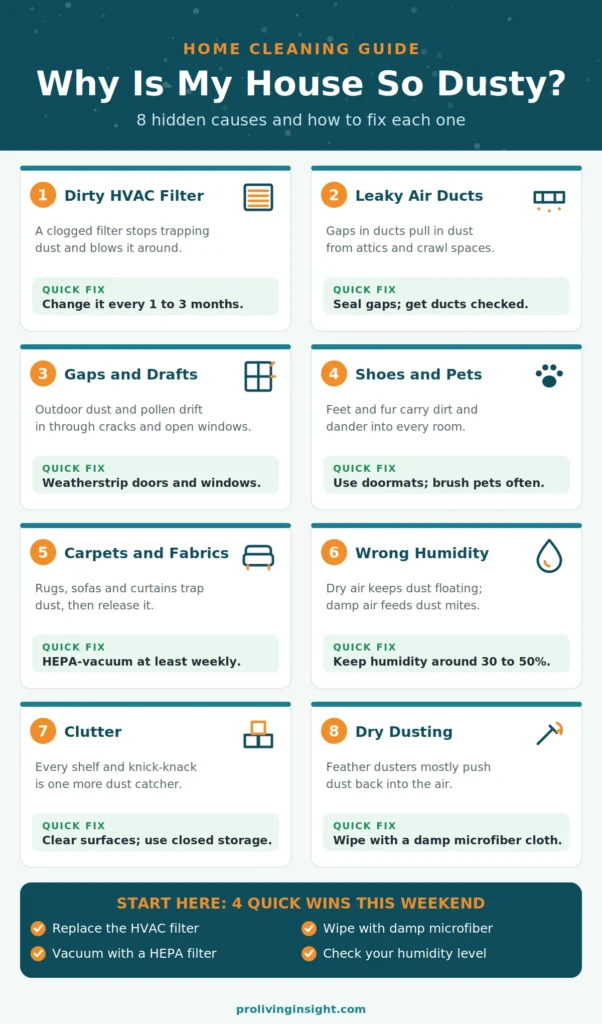
How to fix it: Start by checking the weatherstripping around exterior doors and looking for visible gaps around windows. Repair damaged seals where necessary, and place sturdy doormats at entrances to catch dirt before it spreads.
Removing outdoor shoes before walking through the house can help, too. If you prefer opening your windows for fresh air, consider outdoor dust and pollen levels before doing so.
You do not need to keep your home sealed all day. The goal is to limit unnecessary dust entry while maintaining appropriate ventilation.
2. Your HVAC Filter Is Dirty or Does Not Fit Properly
Your heating and cooling system moves air through your home, and its filter captures certain airborne particles as air passes through it. However, the filter cannot catch everything, and its performance depends on its condition and proper installation.
A clogged or damaged filter may not work as intended. An incorrectly sized filter can create gaps that allow air to bypass the filtering material altogether.
If you notice dust collecting around air supply vents or the problem seems worse when your heating or cooling system runs, the filter is worth checking. These signs do not prove that the HVAC system is responsible, but they provide a useful starting point.
How to fix it: Turn off the system if needed for safe access, then inspect the filter according to the equipment instructions. Check for heavy dirt buildup, damage, and gaps around the edges. Replace the filter as recommended by the manufacturer.
Do not automatically buy the highest-rated filter available. Some HVAC systems cannot handle the additional airflow resistance of certain high-efficiency filters. Choose a compatible filter that suits your equipment and household needs.
If the dust problem continues despite a clean, correctly fitted filter, an HVAC professional can help identify other possible causes.
3. Carpets and Rugs Are Trapping Dust
Why Is My House So Dusty? Carpets may look clean while holding a surprising amount of dirt beneath the surface. Their fibers trap soil, pollen, hair, and other particles that enter on shoes, clothing, and pet paws.
The problem does not end when those particles settle into the carpet. Walking across the room can disturb some of the trapped material and send fine particles back into the air.
Area rugs can create the same issue, especially near entrances, under dining tables, and in busy living rooms. Dust can also collect underneath rugs, where routine vacuuming rarely reaches.
How to fix it: Vacuum carpets and rugs regularly, paying particular attention to areas that receive the most foot traffic. A vacuum with effective filtration can help capture fine particles rather than releasing them back into the room.
Move lightweight rugs when cleaning and vacuum underneath them. If you have pets or children, you may need to clean these areas more frequently.
Hard flooring can make dirt easier to spot and remove, but switching from carpet will not eliminate dust. Particles still settle on hardwood, tile, laminate, and furniture. The difference comes from how easily you can remove them.
4. Your Pets Are Contributing More Dust Than You Realize
Pets bring more into a home than the occasional muddy paw print. Loose hair, skin flakes, and particles carried on their coats can become part of household dust.
These materials collect on sofas, blankets, carpets, pet beds, and other places where animals spend time. Even pets that shed very little can contribute some dander.
You might notice the problem around your pet’s favorite sleeping spot or on furniture where it regularly rests. However, pet-related particles are only one possible explanation for dust in those areas.
How to fix it: Brush your pet regularly using suitable grooming tools, and clean its bedding according to the care instructions. Vacuum favorite resting places and wash removable furniture covers when appropriate.
Keeping a washable blanket on a frequently used sofa can make cleanup easier. You can also place a washable mat near the entrance your pet uses most often.
You do not need to exclude pets from every room. Instead, focus on the places where they spend the most time and establish a cleaning routine that suits your household.
5. Bedding, Curtains, and Upholstered Furniture Release Fibers
Your bedroom may become dusty even when you rarely open its windows. The reason could be the amount of fabric inside the room.
Mattresses, pillows, sheets, blankets, curtains, and upholstered furniture can release small fibers and hold particles that eventually become part of household dust.
Think about what happens when you shake a blanket, fluff a pillow, or pull back your bedsheets. These ordinary movements can disturb settled particles and send some of them into the air.
Dust can also accumulate behind headboards, beneath beds, and inside the folds of heavy curtains. These areas are easy to overlook during regular cleaning.
How to fix it: Wash sheets and pillowcases regularly according to their care labels. Vacuum upholstered furniture when needed, and clean beneath the bed rather than concentrating only on visible surfaces.
If your room contains lots of decorative pillows, thick curtains, and fabric-covered furniture, give those items attention during your cleaning routine. You do not have to remove them, but keeping them clean can help control the amount of dust they hold.
A quick wipe of the dresser will not address particles collecting throughout the rest of the room. Clean the surrounding fabrics and hidden areas as well.
6. Your Cleaning Method Is Moving Dust Instead of Removing It
Cleaning more often does not always mean your home will stay cleaner. The tools and techniques you use can affect how much dust you actually collect.
A dry duster may push particles across a shelf instead of trapping them. Sweeping with a dry broom can lift fine dust into the air, allowing it to settle on furniture moments later.
Vacuum cleaners can also contribute to the problem if their filters are damaged, their dust containers are full, or their seals allow particles to escape.
This can create a frustrating cycle: you clean the room, dust becomes airborne, and the same surfaces look dirty again shortly afterward.
How to fix it: Use a slightly damp microfiber cloth on suitable hard surfaces. It can collect settled particles without spreading them as easily as some dry dusting methods.
Work from top to bottom. Clean ceiling fans and high shelves first, then move to tables, furniture, and lower surfaces. Finish by vacuuming or cleaning the floor.
Pay attention to your vacuum cleaner’s maintenance requirements. Empty its dust container or replace its bag as directed, and clean or replace filters according to the manufacturer’s instructions.
This order matters because dust falling from higher surfaces can land on areas you have already cleaned. Working systematically helps you avoid repeating the same chores.
7. Cooking, Candles, and Fireplaces Add Airborne Particles
Not all household dust enters through the front door. Some particles are produced by activities that happen inside your home every day.
Cooking can release fine particles into the air, particularly when frying food or cooking at high temperatures. Burning candles and using fireplaces can also produce airborne particles that may settle on nearby surfaces.
These particles can mix with other household dust, contributing to buildup around kitchen counters, shelves, and furniture.
How to fix it: Use a range hood that vents outdoors when available, following the manufacturer’s instructions. Keep the hood clean and maintain its filters as recommended.
If you regularly burn candles, consider reducing their use while investigating persistent indoor particle buildup. Keep fireplaces properly maintained and make sure they vent correctly.
You do not need to stop cooking or remove every candle from your home. Focus on limiting unnecessary particle sources and improving ventilation where appropriate.
If you use fuel-burning appliances, never compromise required ventilation or safety measures in an attempt to reduce dust.
8. Recent Renovations Have Left Fine Dust Behind
A room can look finished long before all its renovation dust has disappeared. Sanding, drilling, cutting materials, replacing flooring, and installing shelves can release fine particles that spread into neighboring rooms.
Some dust settles on window sills, baseboards, cabinet interiors, door frames, and the tops of furniture. Other particles may reach nearby rooms through open doorways or air movement.
If your house became noticeably dustier after a renovation, the project could be contributing to the buildup.
How to fix it: Clean affected surfaces carefully and vacuum using suitable filtration. Check window sills, baseboards, cabinet interiors, and areas around the renovation. Follow the cleaning instructions for the materials involved.
For future projects, isolate the work area where practical and use appropriate dust-control measures. Protect HVAC openings during dusty work when appropriate, following equipment guidance, and make sure the area is cleaned before normal use resumes.
Older homes require additional caution. Renovation work can disturb lead-based paint or asbestos-containing materials in some buildings. Do not dry-sand, scrape, or vacuum suspected hazardous materials with ordinary household equipment. Seek qualified guidance before disturbing them.
If dust continues to return after ordinary renovation cleanup, investigate hidden deposits rather than repeatedly cleaning only the visible surfaces.
9. Your Air Ducts May Need an Inspection
Air ducts carry heated or cooled air between your HVAC equipment and the rooms in your home. Under certain conditions, damaged connections, contamination, or other system problems may contribute to indoor dust.
However, finding dust inside an air vent does not automatically mean the ductwork is causing your dusty house. Ordinary household particles can settle around vents, and many other sources may explain the buildup.
That distinction is important because professional duct cleaning can cost money without solving the actual problem.
How to fix it: Start with the basics. Check your HVAC filter, make sure it fits correctly, and look for obvious damage around accessible duct connections if you can do so safely.
Pay attention to specific warning signs, such as excessive debris blowing from supply registers, evidence of pests, or moisture and mold inside the system. If you notice these problems, arrange an inspection by a qualified HVAC professional.
Do not schedule duct cleaning simply because a vent looks dusty. First, determine whether there is a specific issue that requires attention. The right solution depends on what the inspection finds.
How to Reduce Dust in Your House Without Cleaning Every Day
Why Is My House So Dusty? You do not need to spend hours wiping furniture to make a noticeable difference. A consistent routine that targets the main sources of dust can be more effective than repeatedly cleaning the same surfaces.
Start with a few practical changes and adjust them to your household.
Use a damp microfiber cloth. Wipe suitable hard surfaces with a slightly damp cloth to collect dust rather than scattering it. Clean high shelves and furniture before moving to lower surfaces.
Vacuum busy areas regularly. Focus on entryways, carpets, rugs, upholstered furniture, and places where pets spend time. Adjust how often you vacuum based on how quickly dirt returns.
Keep outdoor dirt near the entrance. Use doormats, remove outdoor shoes indoors, and clean visible dirt before it spreads through the house.
Maintain your HVAC filter. Check its condition periodically and replace it according to the manufacturer’s recommendations. Make sure it fits correctly and is compatible with your system.
Wash bedding and washable covers. Sheets, pillowcases, pet bedding, and removable furniture covers can collect particles over time. Regular washing helps remove that buildup.
Control particles produced indoors. Use appropriate kitchen ventilation, maintain fireplaces correctly, and take precautions during home improvement projects.
Clean overlooked areas. Dust can collect under beds, behind furniture, on baseboards, and around window frames. Include these spots in your routine instead of focusing exclusively on visible surfaces.
Consider an air purifier. A properly sized air cleaner with an effective particle filter may reduce airborne dust in the room where it operates. Choose a model suited to the room size, check its clean-air delivery information, and consider replacement filter costs.
The most important step is identifying which sources affect your home the most. A household with pets may benefit from more frequent vacuuming, while a home near construction may need better control of outdoor and renovation dust.
You can start with inexpensive changes before purchasing equipment or paying for professional services.
Does an Air Purifier Actually Help With Dust?
Yes, an appropriate air purifier can reduce airborne particles, but it will not solve every dust problem in your house.
A portable air purifier draws room air through a filter and returns filtered air to the space. Its effectiveness depends on the filtration system, room size, airflow, and how consistently you operate and maintain it.
Before buying one, check the recommended room size and clean-air delivery rate. Make sure replacement filters are available and affordable, and place the unit where air can circulate freely.
A purifier with effective particle filtration can help capture airborne dust before some of it settles on furniture. However, results vary with the unit and the conditions in your home.
There is also an important limitation: an air purifier mainly treats particles that pass through it. It will not remove dust already sitting beneath your bed, clean a dirty carpet, or prevent soil from entering through an open door.
For that reason, buying an air purifier should not be your first step in every situation. Identify the main sources of dust, improve your cleaning routine, and then consider filtration if airborne particles remain a concern.
Should You Change Your HVAC Filter More Often?
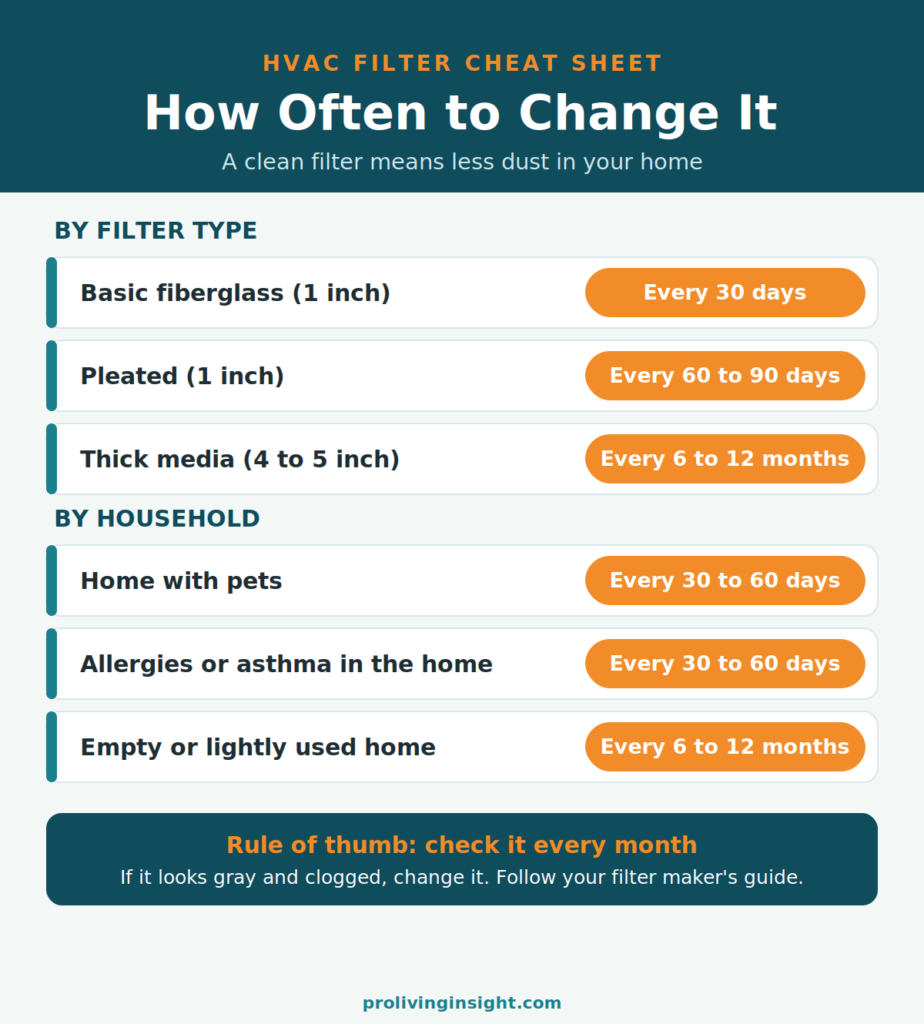
Possibly. The right replacement schedule depends on the filter type, HVAC equipment, household conditions, and manufacturer’s recommendations.
A home with several pets, frequent system use, or substantial indoor dust may need more frequent filter changes than a home with fewer particle sources. However, there is no single schedule that works for every household.
Check the filter periodically instead of relying entirely on a calendar reminder. If it appears heavily loaded with dust or becomes clogged, follow the manufacturer’s instructions for replacement.
Correct installation matters just as much as replacement. A filter that is too small or improperly positioned may allow air to bypass it.
Also, do not assume that a higher-efficiency filter is automatically better for your system. Some filters create more resistance to airflow, and not every HVAC unit is designed to handle that resistance.
If you are unsure which filter to choose, consult the equipment documentation or ask an HVAC technician. The goal is to capture particles effectively without interfering with the system’s operation.
Is Too Much Dust in a House a Sign of a Bigger Problem?
Not necessarily. Some household dust is normal, even when you clean regularly. The amount varies with outdoor conditions, flooring, pets, ventilation, and everyday activities.
Still, certain patterns deserve a closer look.
If dust repeatedly appears around one particular air vent, check the filter and consider having the HVAC system inspected. If you notice persistent moisture, visible mold, or a musty smell, investigate the moisture source instead of treating the issue as ordinary dust.
Dust that suddenly increases after renovation also deserves attention, especially if older building materials may have been disturbed.
You should also pay attention to how household members feel. If anyone experiences persistent respiratory irritation, reducing particle sources and improving filtration may help. Seek medical advice for ongoing or concerning symptoms rather than assuming dust is the only possible cause.
In most homes, the best approach is to start with common explanations and look for evidence before spending money on major repairs or specialist cleaning.
Frequently Asked Questions
Why does my house get dusty one day after cleaning?
Dust can return quickly because outdoor particles keep entering the home while carpets, bedding, pets, and daily activities contribute additional particles. Dry dusting may also scatter dust instead of collecting it. Identifying the main sources is more effective than repeatedly wiping the same surfaces.
Why is my bedroom so dusty compared with the rest of the house?
Bedrooms contain mattresses, pillows, sheets, curtains, clothing, and upholstered furniture that can collect and release fibers and other particles. Dust beneath the bed, behind furniture, and around air vents may also contribute. Washing bedding and cleaning hidden areas can help reduce the buildup.
Can a dirty air filter make my house dusty?
A dirty, damaged, or incorrectly fitted HVAC filter may contribute to dust problems because it cannot perform as intended. Inspect the filter, check its fit, and replace it according to the manufacturer’s guidance. If dust continues to collect around vents, investigate other possible causes as well.
Does opening windows make a house dustier?
It can. Open windows allow outdoor particles, including pollen and soil, to enter. The amount depends on outdoor conditions, nearby traffic, construction, weather, and the location of your home. Consider local air quality when deciding when to ventilate.
Is it better to dust with a dry or damp cloth?
A slightly damp microfiber cloth generally works better for collecting dust from suitable hard surfaces. Some dry cloths and dusters can move particles into the air instead of trapping them. Always follow the care instructions for delicate surfaces.
Will replacing carpet with hard flooring eliminate dust?
No. Hard flooring may make visible dust and dirt easier to remove, but it does not prevent particles from settling on floors, furniture, and other surfaces. Regular vacuuming, damp cleaning, and controlling dust sources remain important.
Should I have my air ducts cleaned if my house is dusty?
Not automatically. Dust can come from many sources, and routine duct cleaning has not been shown to prevent health problems. Consider an inspection if you notice excessive debris coming from registers, pest contamination, or moisture and mold inside the system. Address the actual cause before paying for cleaning.
What is the fastest way to reduce dust in a house?
Start by damp-dusting furniture, vacuuming floors and rugs, and cleaning areas where dust collects most heavily. Check your HVAC filter and reduce dirt entering through doors. These steps can remove existing buildup and address several common sources, although new dust will continue to form.
Why does dust keep coming back even when my windows stay closed?
Closed windows do not prevent all outdoor particles from entering. Dust can come through doors, small gaps, clothing, shoes, pets, and other everyday activities. Carpets, bedding, and furniture also release or hold particles indoors. Look at several possible sources instead of assuming the windows are responsible.
Final Thoughts
Why Is My House So Dusty? If your house seems dusty no matter how often you clean, doing more of the same may not solve the problem. The better approach is to find out where the particles are coming from and address those sources directly.
Start with simple checks. Inspect your HVAC filter, clean carpets and fabric surfaces, use a damp microfiber cloth, and reduce the dirt entering through your doors. Pay attention to where dust returns first, because that pattern can help you narrow down the cause.
You may not need an expensive air purifier, professional duct cleaning, or a completely different cleaning routine. Small, targeted changes can make a meaningful difference when they address the actual problem.
A completely dust-free home is not a realistic goal. But you can reduce dust buildup, spend less time repeating chores, and keep your home cleaner for longer by combining effective cleaning with sensible source control.