Floating Kitchen Shelves Ideas Open a kitchen cabinet, and you’ll often find the same familiar scene: plates stacked in the back, mugs squeezed into tight spaces, and valuable wall space going completely unused. Floating shelves offer a stylish alternative. Instead of keeping your everyday essentials hidden behind cabinet doors, they turn dishes, glassware, cookbooks, mason jars, and fresh herbs into part of your kitchen’s overall design.
It’s easy to see why floating shelves continue to be a popular kitchen design trend in 2026. They’re relatively affordable, don’t require a complete kitchen renovation, and can instantly make a room feel brighter, more open, and less crowded. Whether you have a compact galley kitchen, a cozy apartment, or a spacious open-concept layout, there’s a floating shelf solution that can work beautifully in your space.
In this guide, you’ll discover inspiring kitchen floating shelves ideas, the best materials to consider, smart placement options, styling tips, and a simple installation guide to help you create shelves that are both practical and visually appealing.
What Are Kitchen Floating Shelves?
Floating Kitchen Shelves Ideas are wall-mounted shelves designed with hidden brackets or concealed mounting hardware, creating the appearance that the shelf is attached directly to the wall without visible supports. This clean, streamlined design makes them a versatile choice for almost any kitchen style.
In kitchens, floating shelves can be used as an alternative to upper cabinets or as an additional storage solution. They’re ideal for displaying everyday dishes, mugs, glassware, cookbooks, decorative pieces, spices, and small plants while keeping frequently used items within easy reach.
Unlike traditional shelving systems with visible brackets, floating shelves create a more minimal and uncluttered appearance. Depending on the material and finish you choose, they can complement everything from a warm farmhouse kitchen to a sleek contemporary space.
Benefits of Floating Shelves in the Kitchen
Before choosing the right design, it’s worth understanding why floating shelves have become such a popular kitchen storage solution.
- Make the kitchen feel more open — Removing bulky upper cabinets can create a lighter and more spacious visual effect.
- Offer a budget-friendly upgrade — Floating shelves are generally less expensive than installing custom upper cabinetry.
- Work well for DIY projects — Many shelf systems can be measured, mounted, and styled within a single afternoon.
- Keep everyday essentials accessible — Plates, mugs, bowls, spices, and glasses can be easy to reach when you need them.
- Add personality to the room — Open shelving gives you a place to display beautiful dishware, plants, artwork, and decorative accessories.
- Adapt to different design styles — Wood, metal, glass, and painted shelves can complement farmhouse, rustic, industrial, minimalist, and modern kitchens.
35+ Kitchen Floating Shelves Ideas to Inspire Your Design
1. Rustic Wood Floating Shelves
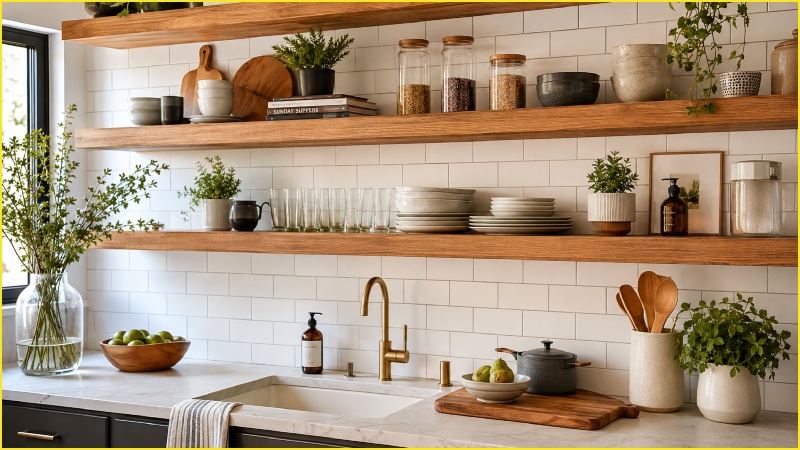
Thick wood shelves with natural grain or live-edge details can instantly add warmth and character to a kitchen. They look especially attractive against white cabinets, neutral walls, or light-colored backsplashes, creating a balanced contrast without making the room feel overly busy.
2. Farmhouse-Style Floating Shelves
For a classic farmhouse aesthetic, consider reclaimed or distressed wood paired with simple metal hardware. Style the shelves with ceramic pitchers, mason jars, neutral dinnerware, woven baskets, and small plants to create a warm, relaxed atmosphere.
3. Modern Minimalist Black Shelves
Matte black floating shelves can make a strong statement in a contemporary kitchen. Pair them with white walls, light cabinetry, or a neutral backsplash for a sophisticated contrast. Keep the styling restrained with a few carefully selected accessories.
4. Crisp White Floating Shelves
White shelves blend seamlessly into bright kitchens and can make a small room appear larger. They’re especially effective when paired with white cabinets or a light backsplash, creating a continuous and uncluttered visual flow.
5. Corner Floating Shelves
Kitchen corners are often overlooked, but they’re valuable storage areas. L-shaped or corner floating shelves can transform these awkward spaces into useful spots for spices, mugs, small plants, or decorative accessories.
6. Shelves Above the Countertop
Installing floating shelves directly above a countertop creates convenient storage while keeping frequently used items close at hand. This is an excellent location for mugs, bowls, everyday dishes, or decorative pieces.
7. Floating Shelves Above the Sink
The wall above the kitchen sink can become a practical display area. Use this space for attractive glassware, dish soap dispensers, small plants, or other items that you regularly use.
8. Floating Shelves Near the Cooking Area
A shelf positioned near the cooking zone can provide easy access to frequently used spices, oils, and seasonings. For safety, keep shelves at an appropriate distance from direct heat and follow the manufacturer’s installation recommendations.
9. Floating Shelves Instead of Upper Cabinets
For a more open and modern appearance, consider replacing some upper cabinets with floating shelves. This approach works particularly well in kitchens with plenty of natural light and homeowners who don’t mind keeping their storage areas organized.
10. Industrial Pipe-Bracket Shelves
Wood shelves combined with black metal pipe brackets create a distinctive industrial look. This style works beautifully with exposed brick, concrete countertops, stainless steel appliances, and other industrial-inspired finishes.
11. Floating Shelves With Hidden LED Lighting
Add LED strip lighting beneath your shelves to create a warm glow across the countertop. Besides improving visibility, under-shelf lighting can highlight decorative objects and create a more inviting kitchen atmosphere.
12. Glass Floating Shelves
Glass shelving offers a lightweight, almost invisible appearance. It’s particularly useful in smaller kitchens where solid shelves may feel visually heavy. Use glass shelves to display glassware, small plants, or decorative kitchen accessories.
13. Narrow Floating Shelves for Small Kitchens
When space is limited, choose shelves with a shallower depth to avoid interfering with work areas or walkways. Narrow shelves can still provide valuable storage for spices, mugs, small jars, and decorative items.
14. Long Wall-to-Wall Floating Shelves
A long shelf running across an entire wall can create a strong architectural feature. Use one continuous shelf for a minimalist appearance or install two or three levels for additional storage and visual interest.
15. Two-Tier Floating Shelves
Two rows of floating shelves provide more storage without the visual weight of a full cabinet system. Keep the lower shelf for everyday essentials and use the upper shelf for decorative pieces or less frequently used items.
16. Three-Level Open Shelving
If you have a large, open wall, three levels of floating shelves can create a dramatic focal point. To prevent the arrangement from looking cluttered, maintain consistent spacing and use a coordinated color palette.
17. Floating Shelves With a Subway Tile Backsplash
Wood shelves paired with a classic subway tile backsplash create a timeless combination. The clean tile pattern provides a structured background, while natural wood adds warmth and texture.
18. Floating Shelves on a Marble Backsplash
For a more sophisticated look, install simple shelves against a marble or marble-look backsplash. The combination of natural stone patterns and streamlined shelving can give a kitchen a refined, high-end appearance.
19. Dark Wood Floating Shelves
Deep walnut and other dark wood finishes can bring richness and depth to a neutral kitchen. Pair them with lighter walls or cabinets to create contrast while maintaining a warm, elegant feel.
20. Light Oak Floating Shelves
Light oak shelves are ideal for Scandinavian-inspired and modern kitchens. Their soft wood tones add warmth while maintaining the bright, clean appearance associated with minimalist design.
21. Reclaimed Wood Shelves
Reclaimed wood brings unique texture, character, and history to a kitchen. Each piece may have its own knots, grain patterns, and imperfections, making it an excellent choice for rustic, farmhouse, and eclectic interiors.
22. Metal Floating Shelves
Metal shelving can give a kitchen a sleek and contemporary appearance. Choose finishes such as black, stainless steel, or other durable coatings depending on the style of your appliances and fixtures.
23. Floating Shelves With Decorative Backs
Instead of mounting shelves directly onto a plain wall, consider creating a contrasting backdrop using tile, wood paneling, stone, or paint. This can help the shelving stand out as a deliberate design feature.
24. Open Shelves Around a Range Hood
Floating shelves positioned around a range hood can frame the cooking area and create a balanced focal point. Make sure the shelves are placed at a safe distance from heat and cooking splashes.
25. Floating Shelves Between Cabinets
If you don’t want to remove your existing cabinets, add floating shelves between two cabinet sections. This creates a built-in appearance while providing extra space for decorative or frequently used items.
26. Floating Shelves at the End of a Cabinet Run
The unused side of a cabinet run can become a practical storage zone with a few narrow shelves. This is a smart way to use otherwise overlooked wall space without changing the main kitchen layout.
27. Floating Shelves for Coffee Stations
Create a dedicated coffee corner with floating shelves above a countertop. Display mugs, coffee containers, jars, and a few decorative accessories to turn a simple coffee station into an attractive focal point.
28. Floating Shelves for a Spice Display
A narrow shelf can keep spice jars organized and visible. Arrange containers by size or use matching jars and labels for a cleaner, more coordinated appearance.
29. Floating Shelves for Cookbooks
If you love cooking, dedicate one shelf to your favorite cookbooks. Combine stacked books with a small plant or decorative object to create a functional display that adds personality to the room.
30. Floating Shelves With Herb Plants
Fresh herbs can add both beauty and convenience to your kitchen. Use a shelf near a suitable natural light source to display small pots of basil, mint, rosemary, or other kitchen-friendly herbs.
31. Floating Shelves Above a Kitchen Island
If your kitchen layout allows it, floating shelves can be incorporated near an island or adjacent wall to create additional storage. Be sure to maintain enough clearance so the shelves don’t interfere with movement or daily kitchen activities.
32. Floating Shelves in a Small Apartment Kitchen
Small kitchens benefit from open shelving because it provides storage without making the room feel as enclosed as traditional cabinets. Choose a slim profile and avoid overloading the shelves to maintain an airy appearance.
33. Minimalist Shelves With Neutral Dishware
For a clean and sophisticated look, use simple wood or white shelves with neutral plates, bowls, mugs, and glassware. Keeping the color palette consistent creates a calm and organized display.
34. Floating Shelves With Baskets
Woven baskets can add texture while helping hide smaller or less attractive kitchen items. Use them selectively to balance open displays with discreet storage.
35. Floating Shelves With Artwork
Your kitchen shelves don’t have to be limited to practical items. Add a small framed print, artwork, or decorative sign to give the space a more personal touch.
36. Mixed Material Floating Shelves
Combining materials such as wood and metal can create visual contrast and add depth. For example, warm wood shelves with black metal details can work particularly well in transitional and industrial-inspired kitchens.
37. Floating Shelves With a Dedicated Display Wall
For a dramatic statement, dedicate one wall entirely to open shelving. Use a carefully coordinated collection of dishes, plants, cookbooks, and decorative accessories to create a display that feels intentional rather than cluttered.
Best Materials for Floating Kitchen Shelves Ideas
Choosing the right material is just as important as selecting the right design. Consider your kitchen’s style, expected shelf load, maintenance needs, and budget before making a decision.
Solid Wood
Solid wood is durable, versatile, and naturally attractive. Oak, walnut, maple, and other hardwoods can work beautifully in rustic, farmhouse, transitional, and modern kitchens.
MDF or Laminate
MDF and laminate shelves are often more budget-friendly than solid wood and are available in a wide range of colors and finishes. They’re a practical choice for homeowners who want a clean, contemporary appearance.
Glass
Glass shelves create a light and airy look and can make smaller kitchens feel less crowded. They’re particularly suitable for displaying glassware and decorative pieces.
Metal
Metal shelves provide a sleek and durable option for modern and industrial kitchens. They’re especially effective when coordinated with existing hardware, faucets, or appliances.
Reclaimed Wood
Reclaimed wood adds distinctive texture and character to a space. It’s an excellent choice for farmhouse, rustic, vintage, and eclectic kitchens, although it should be properly prepared and finished before installation.
How to Style Kitchen Floating Shelves
Installing the shelves is only half the job. The way you style them can determine whether your kitchen looks polished or cluttered.
1. Use the Rule of Odds
Grouping decorative objects in sets of three or five can create a more naturally balanced arrangement. Avoid making every section perfectly symmetrical unless you’re intentionally going for a highly structured look.
2. Mix Different Heights
Combine tall pitchers, vases, and bottles with shorter bowls, mugs, and small containers. Varying heights creates movement and prevents the display from looking flat.
3. Add a Touch of Greenery
Small potted herbs or trailing plants can soften the harder surfaces commonly found in kitchens. Choose plants that suit the available light and your ability to maintain them.
4. Display Items You Actually Use
Floating shelves work best when they combine style with function. Keep frequently used plates, bowls, mugs, or glasses within easy reach instead of filling every shelf with purely decorative items.
5. Stick to a Coordinated Color Palette
Choose two or three main colors that complement your kitchen. A consistent palette helps prevent open shelving from becoming visually overwhelming.
6. Leave Plenty of Breathing Room
One of the biggest mistakes is filling every available inch. Leaving empty space between objects allows individual pieces to stand out and gives the entire display a cleaner appearance.
7. Layer Different Textures
Combine ceramic, glass, wood, metal, and woven materials to create depth. A mixture of textures can make even a simple shelf arrangement feel thoughtfully designed.
Where to Place Floating Shelves in the Kitchen
The right placement can make floating shelves both attractive and practical.
- Above the sink — Ideal for glassware, small plants, and frequently used kitchen accessories.
- Above the countertop — Creates accessible storage for everyday dishes, mugs, and decorative items.
- Near the cooking area — Useful for spices, oils, and seasonings, provided the shelves are positioned safely away from direct heat.
- In unused corners — Makes practical use of awkward or overlooked wall space.
- At the end of cabinet runs — Turns empty wall sections into useful storage without changing the entire kitchen.
- On an empty accent wall — Creates a functional focal point while adding visual interest.
- Around a range hood — Can frame the cooking zone and create a balanced, built-in appearance.
- Near a coffee station — Provides convenient storage for mugs, coffee supplies, and accessories.
How to Install Floating Kitchen Shelves Ideas
Installing floating shelves is often a manageable DIY project, but proper mounting is essential for safety—especially when the shelves will hold heavy dishes or cookware.
Step 1: Locate the Wall Studs
Use a stud finder to identify the studs behind the wall. Whenever possible, secure the shelf mounting hardware directly into studs for better support.
Step 2: Mark the Shelf Position
Determine the desired height and use a pencil and level to mark a straight installation line. Double-check your measurements before drilling.
Step 3: Install the Mounting Hardware
Secure the mounting bracket, cleat, or rail according to the shelf manufacturer’s instructions. Use appropriate anchors if some mounting points cannot be secured into studs.
Step 4: Attach the Shelf
Slide or attach the shelf onto the installed hardware, following the specific instructions provided with your shelving system.
Step 5: Check the Level
Before placing anything on the shelf, use a level to confirm that it is straight and properly secured.
Step 6: Add Weight Gradually
Start with lightweight items and gradually add heavier objects. Avoid exceeding the shelf’s stated weight capacity.
Pro Tip: Floating shelf weight limits can vary significantly depending on the shelf material, bracket design, wall type, and installation method. Always check the manufacturer’s specifications before storing heavy items such as large stacks of dishes, cast iron cookware, or small appliances.
Floating Shelves vs. Kitchen Cabinets: Pros and Cons
Floating Shelves
Pros:
- Less expensive than many custom cabinetry options
- Relatively quick to install
- Creates an open and airy appearance
- Makes everyday items easy to access
- Provides an opportunity to showcase attractive dishware and decor
Cons:
- Requires regular cleaning and organization
- Everything remains visible
- Offers less protection from dust and kitchen grease
- May not be ideal for storing bulky or unattractive items
Kitchen Cabinets
Pros:
- Keeps clutter hidden from view
- Protects stored items from dust and grease
- Provides enclosed storage for bulky kitchen essentials
- Offers a more traditional and streamlined appearance
Cons:
- Typically more expensive to install or replace
- Can make smaller kitchens feel visually heavier
- Items may be less accessible than those stored on open shelves
For many homeowners, the best solution is a combination of both. You can keep cabinets for bulky or less attractive items while using floating shelves for everyday essentials and decorative displays.
FAQs About Floating Kitchen Shelves Ideas
How much weight can kitchen floating shelves hold?
The weight capacity varies depending on the shelf material, mounting hardware, wall construction, and installation method. Some systems are designed for relatively light decorative items, while heavy-duty shelves can support substantially more weight. Always follow the manufacturer’s weight rating and installation guidelines.
Are floating shelves outdated in 2026?
No. Floating Kitchen Shelves Ideas remain a versatile kitchen design option in 2026, particularly in modern, minimalist, farmhouse, and transitional interiors. Their appeal comes from their ability to combine open storage with decorative display. The key is choosing materials and styling that complement the rest of your kitchen.
Do floating shelves need to be installed into studs?
Whenever possible, mounting directly into wall studs provides stronger support. If studs aren’t available in the desired location, use wall anchors specifically rated for the expected load and follow the shelf manufacturer’s installation instructions.
What is the standard depth for kitchen floating shelves?
Kitchen floating shelves commonly range from around 8 to 12 inches deep, although the ideal depth depends on what you plan to store and how much space is available. Narrower shelves around 6 inches deep can work well for spices, small accessories, and compact kitchens.
Are floating shelves practical for everyday kitchen use?
Yes, when they’re properly planned and organized. Floating shelves are especially convenient for items you use regularly, such as plates, mugs, bowls, and glasses. However, they require more frequent cleaning and organization than enclosed cabinets.
How high should floating shelves be above a countertop?
The ideal height depends on your kitchen layout, countertop use, backsplash, and the items you plan to store. Make sure there is enough clearance for comfortable countertop work while keeping frequently used items within easy reach.
Final Thoughts: Make Your Kitchen Shelves Work for You
Floating Kitchen Shelves Ideas are one of the simplest ways to refresh the look and functionality of a kitchen without committing to a complete renovation. From rustic reclaimed wood and industrial metal designs to sleek minimalist shelves and softly lit displays, the possibilities are almost endless.
The best floating shelf design isn’t necessarily the most elaborate one. It’s the option that fits your kitchen’s style, provides the storage you actually need, and complements the way you use the space every day.
Whether you install one small shelf in an unused corner or create an entire open-shelving wall, focus on balance. Choose durable materials, install the shelves securely, keep the styling intentional, and leave enough breathing room between your favorite pieces.
With the right combination of function and design, floating shelves can turn an ordinary kitchen wall into a practical feature that feels polished, personal, and completely your own.