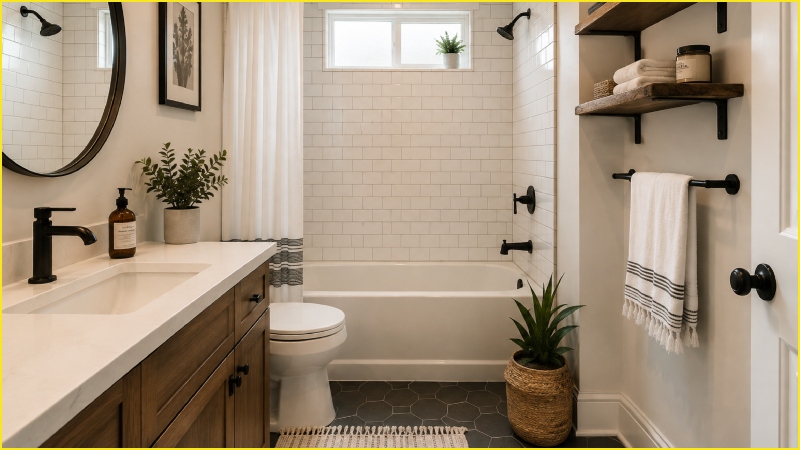
A Small Bathroom Ideas on a Budget project does not need a large remodeling budget to feel better. If your bathroom feels cramped, dark, or outdated, start with changes that solve real problems. Better storage, brighter lighting, a useful mirror, and a cleaner color scheme can make a noticeable difference.
You also do not need to replace every fixture. Keeping the existing layout can help control costs, especially when moving plumbing would add labor and complexity. Current remodeling costs vary widely because materials, labor, fixtures, and layout changes all affect the final price.
The smartest approach is simple: improve how the room looks and works before spending money on major construction.
Here are practical small bathroom ideas on a budget that can help you get more from every square foot.
1. Start With a Simple Bathroom Plan
Before buying paint, shelves, or new fixtures, measure your bathroom.
Write down the room’s length and width. Then measure the vanity, toilet, shower, door swing, and available wall space.
A quick sketch can help you see where storage and accessories can fit.
This step sounds basic, but it can save money. Buying a cabinet that blocks the door or makes the toilet difficult to use creates a new problem instead of solving one.
Make a short priority list:
- Repairs that need immediate attention
- Changes that improve everyday function
- Cosmetic upgrades
- Optional decorations
Spend your money in that order.
2. Paint the Walls a Light, Warm Color
A fresh coat of paint can change the mood of a Small Bathroom Ideas on a Budget without major construction.
Soft white, warm beige, pale gray, and muted blue can help create a brighter appearance.
You do not have to use pure white. A warm neutral can make the room feel more comfortable while still keeping it visually open.
Choose paint intended for bathroom conditions and follow the manufacturer’s preparation and ventilation instructions.
If the walls have stains caused by a leak, fix the moisture problem first. Paint should not be used to hide water damage. bathroom remodeling ideas
3. Use the Same Color on the Walls and Trim
A small room can look visually fragmented when every surface has a different color.
Using closely related shades on the walls, trim, and larger fixtures creates a more continuous appearance.
You can still add contrast through towels, artwork, hardware, or a small rug.
For example, warm white walls can work with natural wood, brushed metal, and muted green accessories.
The result feels intentional without requiring expensive finishes.
4. Replace the Mirror Before Replacing the Vanity
A mirror is one of the most useful visual tools in a compact bathroom.
A wider mirror can reflect more light and make the room appear more open.
If your existing vanity still works well, there is little reason to replace it just because it looks dated.
Instead, consider installing a new mirror above it.
A frameless design creates a clean appearance. A simple framed mirror can add more character.
Measure the wall and vanity before buying. The mirror should look proportional rather than oversized.
For homeowners looking for small bathroom ideas on a budget, updating the mirror can offer a noticeable visual change without replacing the entire vanity.
5. Improve the Bathroom Lighting
A small bathroom can feel even smaller when it has poor lighting.
Start by evaluating the existing fixtures.
If the room has one harsh ceiling light, better vanity lighting may improve the space more than another decorative item.
Wall-mounted fixtures beside the mirror can provide useful facial lighting. A suitable ceiling fixture can provide general illumination.
For any new electrical wiring or fixture installation, follow local requirements and use a qualified electrician when necessary.
Good lighting also helps other upgrades look better.
A clean mirror, fresh paint, and organized storage have more visual impact when the room is properly illuminated.
6. Turn Empty Wall Space Into Storage
Floor space is valuable in a small bathroom.
That makes your walls an important storage resource.
Install floating shelves above suitable areas such as the toilet or vanity. You can use them for towels, toiletries, baskets, or decorative items.
Keep the shelves relatively uncluttered.
Too many objects can make the room feel crowded again.
If you are comparing small bathroom ideas on a budget, vertical storage is one of the most practical options because it adds function without taking up valuable floor space.
7. Use the Space Above the Toilet
The wall above the toilet is often wasted space.
A narrow shelving unit can turn it into useful storage.
You could keep toilet paper, hand towels, extra toiletries, or small baskets there.
If you rent, consider removable storage solutions where appropriate. If you own the home, securely mounted shelves can provide a more permanent solution.
Always check the wall type and mounting requirements before installing a loaded shelf.
8. Choose a Slim Vanity
If your vanity takes up too much floor space, replacing it may be worthwhile.
Look for a compact vanity that provides useful storage without dominating the room.
Common small-bathroom vanity widths include 24, 30, and 36 inches, although the right size depends on your layout.
A wall-mounted or floating vanity can also expose more floor beneath it.
That extra visible floor can make the room feel less crowded.
Do not choose a vanity based only on appearance. Open the doors and drawers first and consider how much storage you actually need.
9. Declutter the Countertop
This is one of the best free bathroom upgrades.
Remove products you no longer use.
Store backup supplies inside cabinets or baskets.
Keep only frequently used items on the counter.
A mostly clear vanity creates more visual space and makes cleaning easier.
You may discover that you do not need another storage cabinet after all.
Sometimes the best budget solution is simply using your existing storage more efficiently.
This is why small bathroom ideas on a budget should not always involve buying something new. Decluttering can improve the room at no cost.
10. Replace Cabinet Knobs and Pulls
Old hardware can make an otherwise decent bathroom look dated.
Replacing cabinet knobs or pulls is relatively simple and can give the vanity a refreshed appearance.
Choose a finish that works with the other hardware.
For example, you might use one finish for the cabinet hardware, faucet, towel hooks, and light fixture.
Consistency matters more than choosing the most expensive finish.
Before shopping, measure the existing hardware and check the hole spacing.
That helps you find replacements without unnecessary drilling or cabinet repairs.
11. Refresh the Vanity Instead of Buying a New One
If the vanity cabinet is still in good condition, consider refinishing it.
Clean the surface thoroughly, prepare it correctly, and use a coating suitable for the cabinet material and bathroom environment.
You can pair the updated cabinet with new hardware and a new mirror.
This gives you three visible changes without replacing the entire vanity.
Do not refinish cabinets with serious water damage or structural problems. Repair the underlying issue first.
12. Add a Large Shower Curtain
Your shower curtain can influence how large the bathroom feels.
A light-colored curtain can create a softer, more open appearance.
Simple patterns usually work better than large, busy prints in very small spaces.
You can also install the curtain rod higher if the bathroom layout allows it and use an appropriately longer curtain.
This draws the eye upward and can make the ceiling feel taller.
Make sure the curtain does not interfere with doors, fixtures, or safe movement.
13. Consider a Clear Shower Enclosure
A clear shower enclosure can visually connect the shower area with the rest of the bathroom.
That uninterrupted sightline can make the room appear more open.
However, this is not always a budget-first upgrade.
Replacing an existing enclosure involves materials and potentially professional installation.
If your current shower works well, spend your money elsewhere first.
A new curtain, better cleaning, improved lighting, or updated hardware may deliver more value for less money.
14. Use a Narrow Storage Cart
A slim rolling cart can be useful when permanent storage is limited.
You can place it beside the vanity or in another unused corner.
Use it for toiletries, towels, hair-care products, or cleaning supplies.
The advantage is flexibility.
You can move the cart when cleaning or remove it if you need additional floor space.
Choose a narrow model that does not restrict access to the toilet, shower, or doorway.
15. Make the Shower Area Look New With Cleaning and Fresh Caulk
Sometimes an old shower looks worse because of buildup rather than age.
Deep-clean the appropriate surfaces first.
Pay attention to grout, shower glass, fixtures, and corners.
If old caulk is cracked, separating, or deteriorating, replacing it may improve the appearance considerably.
Use a bathroom-appropriate caulk and follow the product instructions.
However, do not treat caulk as a solution for an active plumbing leak or hidden water damage.
A cosmetic repair should never replace a proper repair.
16. Add Hooks Instead of Another Towel Bar
A traditional towel bar can take up more wall space than you expect.
Hooks are often more practical in a compact bathroom.
Install them where towels can dry properly and remain easy to reach.
You can use separate hooks for hand towels, bath towels, or robes.
This also gives each person a designated place for their towel.
Choose hooks that match the bathroom’s other hardware for a cleaner look.
17. Use a Medicine Cabinet for Hidden Storage
Open shelves are useful, but not everything needs to be visible.
A medicine cabinet can hide small products while keeping them accessible.
If you are replacing an existing mirror, consider a mirrored cabinet that combines two functions.
This is especially useful when countertop and cabinet storage are limited.
Before installation, check the available wall depth and make sure the cabinet works with existing plumbing or electrical components.
More involved recessed installations may require professional help.
18. Use One or Two Decorative Elements
Small bathrooms rarely need lots of decoration.
Choose a few pieces that add personality without taking up useful space.
A small plant, framed print, attractive soap dispenser, or textured towel can be enough.
Avoid filling every shelf and wall.
A little empty space makes the room feel calmer and more organized.
If you like bold design, use one feature rather than several competing patterns.
19. Choose Bathroom Textiles Carefully
New towels and a bath mat can refresh the room without construction.
Use colors that complement the walls and fixtures.
Neutral towels create a clean appearance. A muted accent color can add personality.
Choose a bath mat that fits the available floor area.
Do not cover most of the floor with rugs. Leaving visible flooring can help maintain a sense of openness.
Wash textiles regularly and allow bath mats to dry properly between uses.
20. Skip Expensive Layout Changes
If the bathroom layout already works, think carefully before moving plumbing.
Relocating a toilet, sink, or shower can turn a modest refresh into a much larger project.
Instead, improve the existing arrangement.
Replace outdated fixtures only when they need replacement.
Use compact storage.
Improve lighting.
Update finishes.
You can get a meaningful visual change without rebuilding the entire room.
For homeowners searching for small bathroom ideas on a budget, keeping the existing plumbing layout is often one of the easiest ways to control the scope of a project.
21. Set a Budget Before You Shop
A budget is only useful when you actually follow it.
Divide your spending into categories before buying anything.
For example:
Under $100:
Focus on paint, hooks, hardware, towels, storage baskets, or small accessories.
$100–$500:
Consider a mirror, lighting fixture, vanity refresh, shelves, or several cosmetic updates.
$500 and above:
You can begin considering larger fixture upgrades, depending on your local labor and material costs.
These are planning ranges, not fixed national prices. Actual costs vary by product, location, labor, and project scope.
The important thing is to decide what you want to accomplish before you start spending.
How to Make a Small Bathroom Look Bigger Without Remodeling
You do not need to knock down walls to change how the room feels.
Start with the visual basics.
Use light or consistent colors. Keep the countertop clear. Add a larger mirror. Improve lighting and use vertical storage.
If you have a shower curtain, choose a simple design that does not visually divide the room.
You should also avoid oversized furniture.
Every item in a small bathroom needs to earn its place.
If something provides neither useful storage nor a clear design benefit, consider removing it.
What Should You Spend Money on First?
The smartest spending order is usually:
1. Water or safety problems
Fix leaks, damaged surfaces, ventilation problems, or other issues that could cause further damage.
2. Lighting
Good lighting improves the room’s function and appearance.
3. Storage
A bathroom that stays organized feels better every day.
4. High-visibility surfaces
Paint, mirrors, hardware, and the vanity can change the room’s appearance quickly.
5. Decorations
Add these after the practical improvements are complete.
This order helps prevent you from spending your entire budget on things that look good while ignoring problems that matter more.
Small Bathroom Ideas That Are Usually Not Worth the Money
Not every popular bathroom upgrade makes sense for a tight budget.
Be careful with expensive changes that provide little functional improvement.
For example, replacing a perfectly usable vanity simply because you dislike its color may not be the best use of your money.
The same applies to decorative tile when your existing tile is in good condition.
Instead, ask three questions before every purchase:
- Does it actually solve a problem?
- Will you get enough use out of it?
- Is the difference worth the cost?
If the answer is no to all three, keep your money.
Common Small-Bathroom Mistakes
Buying Furniture Before Measuring
Always measure first.
A few inches can determine whether a cabinet fits comfortably.
Using Too Many Colors
Multiple strong colors can make a compact bathroom feel visually busy.
Keep the larger surfaces simple and use accessories for contrast.
Creating Open Shelves That Become Cluttered
Open storage looks good only when it stays organized.
Use baskets and limit the number of visible products.
Ignoring Ventilation
Bathrooms produce moisture every day.
Good ventilation helps manage humidity and protects finishes.
If your existing exhaust fan is not working properly, address that before focusing on decorative upgrades.
Choosing Style Over Function
A beautiful vanity is not useful if its drawers cannot hold your essentials.
Always consider storage, clearance, cleaning, and daily use.
A Simple Budget Bathroom Makeover Plan
If you want to complete your bathroom refresh gradually, use this order.
Weekend 1: Clean and Declutter
Remove unused products.
Deep-clean the bathroom.
Check for damaged caulk, grout, fixtures, or surfaces.
Weekend 2: Paint and Refresh
Paint suitable surfaces.
Replace cabinet hardware.
Add new towels and a bath mat if needed.
Weekend 3: Improve Storage
Install shelves or hooks.
Organize cabinets.
Use baskets for small products.
Weekend 4: Add the Finishing Touches
Install or replace the mirror.
Improve lighting if needed.
Add one or two decorative pieces.
This approach spreads the cost over time instead of forcing you into one expensive shopping trip.
Final Thoughts
The best small bathroom ideas on a budget are not about buying the cheapest products.
They are about spending money where it creates the most noticeable improvement.
Start by fixing problems and measuring your space. Then focus on lighting, storage, paint, mirrors, hardware, and organization.
Keep the existing layout when it already works. Moving plumbing can add significant cost and complexity.
Most importantly, do not try to fill every inch of a small bathroom.
A well-organized room with good lighting and a simple design can feel much larger than a cluttered bathroom filled with expensive finishes.
You do not need a complete remodel to create a bathroom you enjoy using.