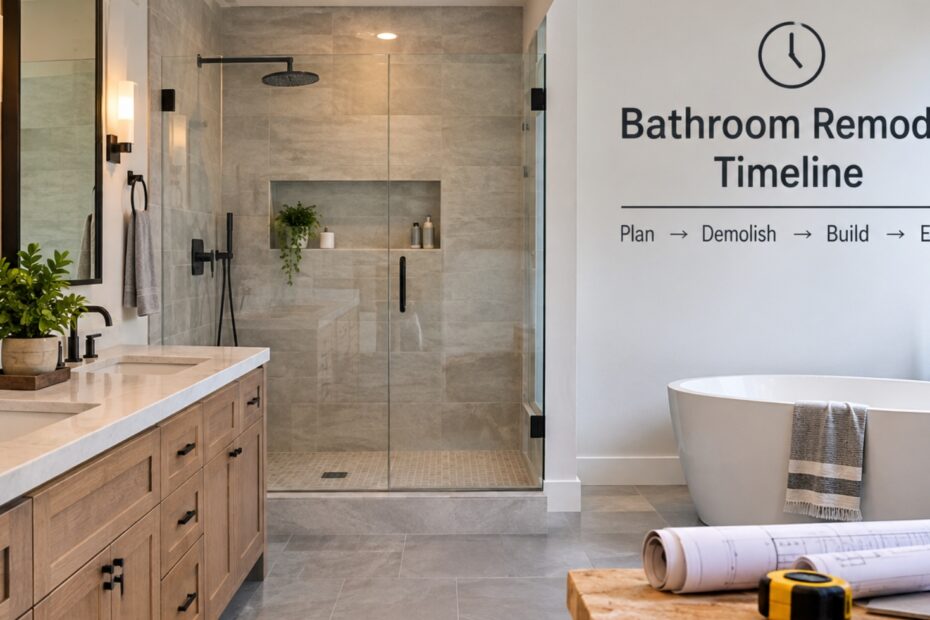
How long does a bathroom remodel take? Most full bathroom remodels take about two to six weeks once construction begins. A simple cosmetic update may take only a few days, while a major renovation involving plumbing, walls, permits, or a new layout can take eight weeks or longer.
The construction period is only part of the timeline, though. Planning, choosing materials, ordering fixtures, getting permits, and waiting for inspections can add several weeks before the actual remodeling work begins.
The good news is that you can usually estimate your bathroom remodel timeline by looking at the project’s scope. This guide explains how long each type of remodel takes, what happens during every phase, and which problems can push your completion date back.
Quick Answer: How Long Does a Bathroom Remodel Take?
The average bathroom remodel takes two to six weeks of active construction, but the total planning-to-finish timeline can be longer.
| Bathroom Project | Typical Construction Time | Overall Timeline |
|---|---|---|
| Cosmetic refresh | 3–7 days | 1–3 weeks |
| Mid-range remodel | 2–3 weeks | 3–6 weeks |
| Full gut renovation | 3–4 weeks | 4–8+ weeks |
| Layout or plumbing changes | 4–8 weeks | 6–12+ weeks |
These are general planning ranges rather than guarantees. Your location, contractor, material availability, permit requirements, bathroom size, and project complexity can all change the schedule.
A powder room usually takes less time because it has fewer fixtures and no shower or tub. A primary bathroom with a separate shower, soaking tub, double vanity, extensive tile, and custom features usually takes longer.
How Long Does a Bathroom Remodel Take From Start to Finish?
If you’re asking about the entire project rather than construction alone, expect a longer timeline.
A typical bathroom renovation can involve:
Planning and design: 1–4 weeks
Material selection and ordering: Several days to several weeks
Permitting: A few days to several weeks, depending on the project and location
Demolition: 1–3 days
Plumbing and electrical rough-in: 2–5 days
Waterproofing and wall preparation: 2–4 days
Tile installation: 3–7 days
Fixture and vanity installation: 2–4 days
Final work and punch list: 1–3 days
Some of these stages overlap, while others must happen in a specific order. That’s why adding every number together does not give you an exact completion date.
For a straightforward remodel, the entire process may take roughly three to six weeks from final planning to completion. More complicated projects can take two months or longer.
What Determines How Long a Bathroom Remodel Takes?
Two bathrooms can look similar but have completely different remodeling schedules. The biggest differences usually come from the scope of work and what has to change behind the finished surfaces.
1. The Scope of the Remodel
A cosmetic bathroom update is much faster than a complete renovation.
Replacing a mirror, painting the walls, changing hardware, installing a new vanity, or replacing a toilet may take only a few days.
A full renovation is more involved. The contractor may remove flooring, tile, drywall, cabinets, fixtures, and other finishes before rebuilding the room.
The more parts of the bathroom you replace, the more individual tasks need to be completed before the project is finished.
2. Plumbing Changes
Keeping the toilet, sink, and shower in their existing locations can save significant time.
Moving a toilet or shower may require new supply and drain lines. Depending on the home, accessing those lines can involve opening the floor or walls.
A plumbing relocation can also require additional inspections or repairs before the walls and floors can be closed again.
If your goal is to finish quickly, keeping the existing plumbing layout is usually one of the simplest ways to reduce construction time.
3. Electrical Work
Electrical changes can also add time.
Installing new lighting, moving outlets, adding exhaust fans, or changing the electrical layout may require wiring work inside the walls.
Some projects may also require inspection before walls are closed.
A bathroom that needs only fixture replacements will generally move faster than one requiring extensive electrical changes.
4. Structural or Layout Changes
Changing the physical layout can turn a relatively simple remodel into a major renovation.
Removing a wall, enlarging the bathroom, changing the shower footprint, or combining two spaces may involve framing, plumbing, electrical work, and additional inspections.
Structural changes can also require professional drawings or engineering review, depending on the project and local requirements.
5. Permits and Inspections
Permit requirements vary by location and project type. Many U.S. jurisdictions require permits for certain plumbing, electrical, structural, or layout changes.
Before construction starts, check with your local building department to determine which permits apply to your project.
Inspections may also be required at different stages. For example, work may need to be inspected before walls are closed.
A permit or inspection delay does not necessarily mean your contractor is working slowly. Sometimes the schedule depends on the availability of the local inspection department.
6. Material Availability
Materials can create some of the biggest delays in a bathroom renovation.
Common examples include:
- Custom vanities
- Shower glass
- Specialty tile
- Custom countertops
- Plumbing fixtures
- Lighting
- Cabinet hardware
Stock products may be available quickly, while custom or special-order products can take much longer.
That’s why it’s better to select and order major materials before demolition begins whenever possible.
7. Contractor Availability
The construction itself may take only a few weeks, but getting the right contractor can take much longer.
A contractor who coordinates reliable plumbers, electricians, tile installers, and other trades can often reduce scheduling gaps.
On the other hand, a project can slow down when one trade finishes and the next trade is unavailable.
Before hiring someone, ask who will perform each stage and how the contractor handles scheduling between trades.
8. Hidden Problems
Demolition can reveal problems that were impossible to see beforehand.
These may include:
- Water damage
- Rotting subfloors
- Mold
- Damaged plumbing
- Outdated wiring
- Poor previous repairs
Older homes may have more unexpected conditions, but hidden problems can occur in newer homes too.
It’s smart to leave some flexibility in your schedule instead of planning around an exact final day.
Bathroom Remodel Timeline: What Happens During Each Phase?
Knowing the remodeling phases makes it easier to understand why a project takes several weeks.
Planning and Design: 1–4 Weeks
Before construction begins, you’ll need to decide what you want to change.
This may include the layout, vanity, shower or tub, flooring, wall tile, lighting, fixtures, colors, and storage.
You’ll also need to compare contractors, review estimates, finalize the project scope, and make important design decisions.
Spending more time on planning can actually make construction smoother because fewer decisions need to be made while workers are already on-site.
Materials and Ordering: Several Days to Several Weeks
Once the design is finalized, major materials should be selected and ordered.
Don’t wait until demolition begins to order a vanity, tile, shower door, or specialty fixture.
A missing item can leave an otherwise finished bathroom unusable while the crew waits for delivery.
Permits: A Few Days to Several Weeks
Permit timelines vary between jurisdictions.
Simple projects may have a relatively quick approval process, while projects involving structural changes or multiple trades may take longer.
Because requirements differ by location, confirm the process with your local building department before setting a firm construction date.
Demolition: 1–3 Days
Demolition is usually one of the fastest phases.
Workers may remove the existing vanity, toilet, flooring, tile, tub, shower materials, and other finishes.
This is also the stage when hidden damage often becomes visible.
If water damage or structural problems are discovered, the repair work can extend the schedule.
Rough Plumbing and Electrical: 2–5 Days
If plumbing or electrical work is changing, these systems are installed before the walls are closed.
New supply lines, drains, wiring, switches, outlets, and lighting connections may be completed during this phase.
Required inspections may occur before the next stage begins.
Waterproofing and Wall Preparation: 2–4 Days
Shower areas need appropriate waterproofing before tile is installed.
Walls may also need new backer board, drywall, or other preparation depending on the project.
This stage should not be rushed. Proper preparation helps protect the materials and surfaces behind the finished shower.
Tile Installation: 3–7 Days
Tile installation can take several days depending on the size of the bathroom and the complexity of the design.
Large-format tile, intricate patterns, mosaics, niches, borders, and multiple tile materials can require additional installation time.
Grout and other materials may also need curing or drying time before the next stage.
Vanity and Fixture Installation: 2–4 Days
Once the major surfaces are complete, the contractor can install items such as the
- Vanity
- Sink
- Toilet
- Faucets
- Mirror
- Lighting
- Shower fixtures
The exact order depends on the project.
Final Touches and Punch List: 1–3 Days
The final stage includes small repairs and finishing work.
This can include painting, caulking, hardware installation, adjustments, cleanup, and a final walkthrough.
A punch list gives the homeowner and contractor a chance to identify anything that still needs attention.
What Can Delay a Bathroom Remodel?
Even a well-planned bathroom renovation can experience delays.
Material Delays
A missing vanity, tile shipment, shower door, or plumbing fixture can stop other work from progressing.
Ordering important materials early reduces this risk.
Hidden Damage
Water damage, rot, mold, or damaged wiring discovered during demolition can add unexpected repair work.
Permit or Inspection Delays
A project may have to pause if an inspection is required before the next stage can begin.
Design Changes
Changing the tile, vanity, plumbing location, or layout after construction begins can create additional work.
It may also require new materials and rescheduling.
Contractor Scheduling
If several trades are involved, one scheduling problem can affect the entire sequence.
Custom Products
Custom glass, cabinetry, countertops, and specialty fixtures often have longer lead times than standard products.
How Long Does a Bathroom Remodel Take With a Contractor?
Hiring a contractor doesn’t automatically guarantee a faster remodel.
The timeline depends on the contractor’s crew, subcontractors, workload, project management, and material availability.
Before signing a contract, ask:
- Who handles plumbing?
- Who handles electrical work?
- Who installs the tile?
- Are materials already ordered?
- Who obtains required permits?
- What happens if an inspection is delayed?
- What is the expected construction schedule?
- How are unexpected problems handled?
A clear schedule can help you understand what should happen each week and where potential delays may occur.
What Should You Have Ready Before Demolition?
One of the easiest ways to prevent unnecessary delays is to make important decisions before construction starts.
Ideally, you should have your major selections finalized, including:
- Bathroom vanity
- Sink and faucet
- Toilet
- Shower or tub
- Shower fixtures
- Tile
- Flooring
- Lighting
- Mirror
- Hardware
- Paint color
You don’t necessarily need every small decorative item purchased before demolition, but anything required for the next construction stage should be available or confirmed for delivery.
How to Speed Up Your Bathroom Remodel
You cannot eliminate every possible delay, but you can reduce many avoidable ones.
Keep the Existing Layout
If your toilet, sink, and shower remain in their current locations, you can often avoid extensive plumbing work.
Order Materials Early
Have major materials selected and ordered before demolition whenever possible.
Make Design Decisions Before Construction
Changing your mind halfway through a remodel can create both delays and additional costs.
Choose a Contractor With Reliable Trades
A contractor with dependable plumbers, electricians, tile installers, and other trades can reduce gaps between stages.
Confirm Permit Requirements Early
Ask your local building department what permits apply before setting your construction schedule.
Build a Buffer Into Your Schedule
Don’t schedule an important event immediately after your contractor’s estimated completion date.
A few extra days of flexibility can make unexpected problems much easier to manage.
Can You Live at Home During a Bathroom Remodel?
Most homeowners can stay in their home during a single-bathroom renovation, especially when another bathroom is available.
The bigger issue is convenience.
During demolition and construction, you may deal with:
- Dust
- Noise
- Workers entering the home
- Limited bathroom access
- Temporary plumbing interruptions
- Construction materials
If you’re remodeling the only bathroom, daily life becomes considerably more difficult.
In that situation, arrange an alternative bathroom before demolition starts.
Bathroom Remodel Timeline Comparison
| Project Type | Construction Time | Main Time Drivers |
|---|---|---|
| Cosmetic bathroom refresh | 3–7 days | Paint, fixtures, hardware, vanity |
| Mid-range bathroom remodel | 2–3 weeks | Tile, flooring, fixtures, same layout |
| Full gut renovation | 3–4 weeks | Demolition, new surfaces, fixtures |
| Remodel with layout changes | 4–8 weeks | Plumbing, electrical, framing, inspections |
| Major custom renovation | 8+ weeks | Structural work, custom materials, complex design |
These ranges are useful for planning, but your actual timeline can vary significantly based on the project and location.
Frequently Asked Questions
How long does a bathroom remodel take?
A typical full bathroom remodel takes about two to six weeks of active construction. Simple updates can take a few days, while major layout changes can take eight weeks or longer.
Is a 2-week bathroom remodel realistic?
Yes. Two weeks can be realistic for a mid-range bathroom remodel when the existing layout stays the same, materials are available, and the project does not encounter major problems.
A project involving plumbing relocation, structural changes, custom materials, or extensive repairs may take considerably longer.
Does a small bathroom remodel take less time?
Usually, yes. A smaller bathroom generally has less flooring, tile, and surface area to complete.
However, size isn’t the only factor. A small bathroom with extensive plumbing or layout changes can take longer than a larger bathroom with a simple design.
How long does it take to remodel just a shower or tub?
A straightforward shower or tub replacement can often take several days of on-site work when the plumbing remains in the same location.
A more complicated tub-to-shower conversion may take longer because of demolition, waterproofing, plumbing, tile, glass, and other work.
Can I use my bathroom during a remodel?
Usually not while major construction is taking place in that bathroom.
Once the toilet, sink, or shower is disconnected, normal use may not be possible. If it’s your only bathroom, arrange another option before work begins.
Why does a bathroom remodel take longer than expected?
Common reasons include material delays, hidden damage, permit or inspection scheduling, contractor availability, and design changes.
Unexpected problems discovered during demolition can also add several days or more.
Should I move out during a bathroom remodel?
Most homeowners don’t need to move out for a single bathroom renovation if another bathroom is available.
Moving out may make more sense when you’re remodeling the only bathroom or when construction noise, dust, and limited access would make staying home impractical.
How long does it take to plan a bathroom remodel?
Planning can take anywhere from one to four weeks for a straightforward project.
Complex renovations may require more time for design, contractor selection, material choices, estimates, permits, and final decisions.
Final Takeaway
So, how long does a bathroom remodel take?
For most homeowners, the answer is two to six weeks of active construction, but the complete process can take considerably longer.
A simple cosmetic refresh may finish in less than a week. A mid-range remodel with the existing layout may take two to three weeks of construction. A full renovation with plumbing, structural, or layout changes can take four to eight weeks or more.
The biggest factors are the scope of work, plumbing and electrical changes, permits, materials, contractor scheduling, and unexpected problems.
The best way to keep your project on schedule is to make design decisions early, order major materials before demolition, confirm permit requirements, and leave some room in your schedule for surprises.
A realistic timeline is more useful than a promised completion date that leaves no room for the unexpected.
If you’re planning a bathroom update, explore our guide to smart bathroom remodeling ideas for practical ways to improve your space.