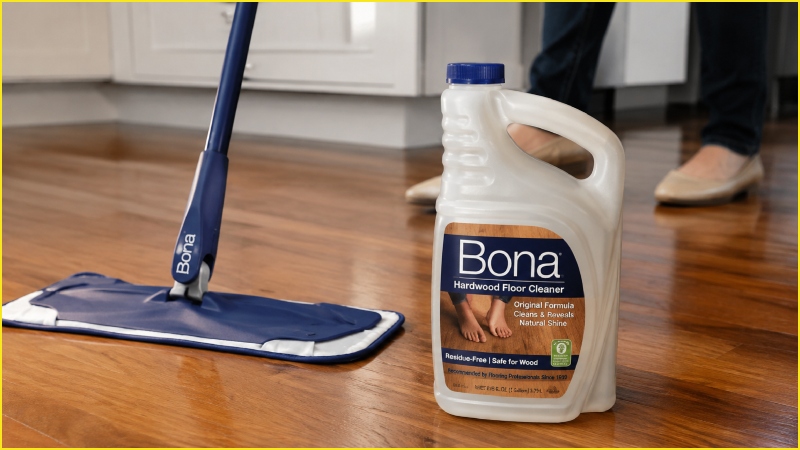
How to Use Bona Hardwood Floor Cleaner Properly
The best way to use Bona hardwood floor cleaner is to first remove loose dirt, then lightly mist a small section of the floor and clean it with a microfiber pad. Work section by section and rinse the pad when it becomes dirty. Avoid leaving excess moisture or a wet mop pad on the hardwood.
Beautiful hardwood floors can instantly make a home feel warmer and more polished. However, keeping that natural beauty intact requires more than regular mopping. The wrong cleaner or too much moisture can leave streaks, dull the finish, and cause problems over time.
Too much water can create problems for wood flooring. Abrasive dirt can scratch the finish. The wrong cleaning product can also leave residue or affect the appearance of the surface.
Bona makes cleaning easier by offering products and cleaning systems designed for different flooring types. However, the correct method depends on the specific Bona product and the type of finish on your floor.
In this guide, you will learn how to use Bona hardwood floor cleaner correctly, how to prevent streaks, how often to clean hardwood floors, what mistakes to avoid, and how to protect your flooring between cleaning sessions.
How Do You Use Bona Hardwood Floor Cleaner?
To use Bona hardwood floor cleaner, follow these basic steps:
- Remove loose dirt, dust, and grit with a vacuum, broom, or microfiber dust mop.
- Check the cleaner label and make sure it is suitable for your flooring.
- Mist the cleaner onto a manageable section of the floor.
- Wipe the area with a clean microfiber mop pad.
- Continue cleaning one section at a time.
- Rinse or replace the cleaning pad when it becomes dirty.
- Avoid leaving excess moisture or a wet mop pad sitting on the floor.
Bona’s wood floor cleaner instructions recommend removing loose dirt first, misting cleaner onto a section, and wiping it clean. For stubborn spots, Bona says to apply cleaner directly to the spot, allow it to work for a few minutes, then scrub and wipe it away.
What You Need to Clean Hardwood Floors
You do not need a complicated collection of cleaning tools.
For routine cleaning, prepare:
| Cleaning item | What it does |
|---|---|
| Microfiber dust mop | Removes loose dust and debris |
| Hardwood-safe vacuum | Cleans edges and hard-to-reach areas |
| Bona hardwood floor cleaner | Removes everyday dirt and grime |
| Microfiber cleaning pad | Cleans the floor without aggressive scrubbing |
| Clean microfiber cloth | Handles small spills and wet spots |
The most important item is a clean microfiber pad.
A dirty pad can spread grime across the floor instead of removing it. Bona’s professional instructions also recommend rinsing the cleaning pad regularly to help prevent streaking.
Step-by-Step: How to Use Bona Hardwood Floor Cleaner
1. Remove Loose Dirt First
Never start by spraying cleaner over a floor covered with dust and grit.
Small particles can become trapped beneath the mop pad and move across the finish as you clean.
Use a microfiber dust mop, sweep the floor, or vacuum using a setting appropriate for hardwood.
Focus on areas that collect the most debris, including:
- Entryways
- Hallways
- Kitchen floors
- Around pet bowls
- Under tables
- Along baseboards
- High-traffic areas
Bona’s current wood floor cleaner instructions specifically recommend removing loose dirt and grit before wet cleaning.
2. Check Your Floor and Cleaner
Before cleaning, confirm that the Bona product you have is intended for your flooring.
This matters because Bona sells different cleaners for different floor surfaces and finishes.
For example, Bona’s Commercial System Hardwood Floor Cleaner is intended for unwaxed, polyurethane-finished wood floors, while other Bona products have different recommended uses.
If you have an unusual finish, an unfinished floor, or a floor with special manufacturer instructions, follow the flooring manufacturer’s care guidance.
3. Mist a Small Section
Do not spray the entire room before you begin mopping.
Instead, work in manageable sections.
Apply the recommended amount of cleaner to one section and immediately clean it with the microfiber pad.
The floor should not be flooded with liquid.
Bona’s wood floor cleaner instructions use a section-by-section approach rather than leaving cleaner sitting across the entire floor.
4. Mop With a Clean Microfiber Pad
Move the mop smoothly across the section you sprayed.
You do not need to scrub aggressively to remove normal household dirt.
If the floor contains stubborn grime, follow the product instructions rather than applying excessive force.
For large rooms, inspect the pad regularly. Once it becomes dirty, rinse it according to the product instructions or switch to a clean pad.
5. Continue Section by Section
Repeat the process until the entire floor is clean.
Working in smaller sections makes it easier to control the amount of cleaner and prevents you from accidentally leaving wet areas unattended.
6. Let the Floor Dry
Allow the floor to dry according to the cleaner’s instructions.
Do not leave a wet cleaning pad face-down on the hardwood after you finish. Bona warns that doing so can cause permanent surface damage.
How Do You Use Bona Without Streaks?
To prevent streaks, use a clean microfiber pad, apply cleaner lightly, work in small sections, and rinse or replace the pad as it becomes dirty.
Streaking does not always mean the cleaner is the problem. Cleaning technique can make a major difference.
Use a Clean Pad
A dirty pad carries soil from one area to another.
If you are cleaning a large floor, keep extra microfiber pads available.
Do Not Overapply Cleaner
Using more cleaner does not automatically produce a cleaner floor.
Excess product can make the floor harder to clean evenly and may leave an undesirable appearance.
Follow the instructions on your specific Bona product.
Keep the Pad Clean
Bona’s current professional hardwood floor instructions specifically recommend rinsing the cleaning pad often to help avoid streaking.
Avoid Mixing Cleaning Products
Do not combine Bona cleaner with vinegar, bleach, ammonia, dish soap, or another floor cleaner unless the manufacturer specifically instructs you to do so.
Mixing products can create unwanted residue and may affect the flooring finish.
How Often Should You Use Bona Hardwood Floor Cleaner?
Most homes can use a hardwood floor cleaner as needed rather than cleaning with liquid every day. Dust removal can be performed more frequently, while damp cleaning depends on traffic, pets, children, and household conditions.
There is no universal schedule for every hardwood floor.
A practical routine is:
| Cleaning task | Typical frequency |
|---|---|
| Dust removal | Several times per week or as needed |
| Vacuuming | Weekly or as needed |
| Bona hardwood floor cleaning | Weekly or as needed |
| Spill cleaning | Immediately |
| Deeper maintenance | Based on floor condition |
High-traffic homes may need more frequent cleaning.
The important point is to remove abrasive dirt regularly without exposing the floor to unnecessary moisture.
Can You Use Bona on Wood Floors Every Day?
You can remove dust and loose debris every day, but most homes do not need liquid hardwood cleaner every day.
Daily dust removal can help prevent grit from accumulating on the floor.
However, routine liquid cleaning should follow the product directions and your floor’s actual needs.
A better everyday approach is:
- Remove loose dirt regularly.
- Clean spills promptly.
- Use Bona cleaner when the floor needs wet cleaning.
- Avoid excessive moisture.
- Follow the flooring manufacturer’s maintenance recommendations.
Bona Spray Mop: How to Use It
If you have a Bona spray mop, the basic cleaning process is straightforward.
Step 1: Remove Loose Dirt
Vacuum, sweep, or dust mop the floor before spraying cleaner.
Step 2: Attach a Clean Microfiber Pad
Secure the appropriate cleaning pad to the mop.
Step 3: Spray the Cleaner
Mist the cleaner onto the floor according to the product instructions.
Step 4: Mop the Area
Use smooth passes to pick up the cleaner and loosened dirt.
Step 5: Rinse the Pad When Needed
If the pad becomes dirty, rinse or replace it before continuing.
Bona’s current spray-mop guidance follows the same basic sequence: vacuum, sweep, or dust mop; mist; then clean, while rinsing the pad regularly to reduce streaking.
Why Is My Hardwood Floor Streaky After Using Bona?
A hardwood floor can look streaky after cleaning because of several factors.
Common causes include:
- A dirty microfiber pad
- Too much cleaner
- Uneven application
- Residue from a previous cleaning product
- Insufficiently rinsed pads
- Cleaning a large area without changing the pad
Start by checking your cleaning method before assuming the product is defective.
Use a clean pad and follow the label directions for your specific cleaner.
What Should You Avoid When Cleaning Hardwood Floors?
Some cleaning habits can cause more harm than good.
Avoid Excess Water
Hardwood floors should not be flooded with water.
Excess moisture can enter seams and damaged areas and may contribute to swelling, staining, or other problems.
Avoid Abrasive Scrubbers
Rough pads can scratch or wear the protective finish.
Bona’s professional cleaning guidance recommends avoiding aggressive pads because they can scratch and wear the surface.
Avoid Unapproved Steam Cleaning
Do not assume a steam mop is safe for every hardwood floor.
Always check the flooring manufacturer’s instructions before using steam.
Avoid Dragging Furniture
Furniture can scratch hardwood when dragged across the surface.
Lift furniture when possible and use appropriate protective pads underneath furniture legs.
Avoid Leaving Wet Materials on the Floor
Do not leave a wet mop or saturated cleaning pad sitting on the hardwood.
Bona specifically warns against leaving a wet cleaning pad face-down on the surface.
Can Bona Hardwood Floor Cleaner Damage Wood Floors?
Bona hardwood floor cleaner is designed for specific flooring applications, but the correct product and proper use matter. Always check the product label and your flooring manufacturer’s instructions before cleaning.
This is an important distinction.
There is no single Bona formula that should automatically be assumed suitable for every type of wood floor.
For example, Bona’s Commercial System Hardwood Floor Cleaner is specified for unwaxed polyurethane-finished wood floors.
Other Bona products have different specifications.
If you are unsure about your floor’s finish, identify the flooring type and check the manufacturer’s care instructions before applying a cleaner.
Can You Use Bona on Unfinished Wood?
Do not assume a Bona cleaner intended for finished hardwood is appropriate for unfinished wood.
Unfinished wood does not have the same protective surface as a sealed or finished floor.
Before cleaning unfinished flooring, follow the flooring manufacturer’s specific care instructions or consult a flooring professional.
Can You Use Bona on Oiled Wood Floors?
Some Bona wood floor cleaners can be used on oiled wood floors, but the maintenance requirements are different.
Bona notes that regular damp cleaning of an oiled wood floor can gradually reduce its protection and appearance. Bona recommends maintenance oil when an oiled floor begins to look dull or worn.
Therefore, do not treat an oiled floor exactly like a polyurethane-finished floor.
Check the cleaner label and the floor manufacturer’s maintenance recommendations.
How to Clean Hardwood Floors With Pets and Kids
Homes with pets and children often require more frequent dirt removal.
Pet hair, outdoor grit, food particles, and moisture can quickly accumulate around high-use areas.
A practical routine is to:
- Dust mop high-traffic areas regularly.
- Clean spills promptly.
- Keep entryways protected with suitable mats.
- Clean around pet feeding areas more often.
- Wash microfiber pads after use.
- Keep cleaning products stored safely.
The goal is not to use more cleaner. It is to prevent dirt and moisture from remaining on the floor.
How to Protect Hardwood Floors Between Cleanings
Good floor care goes beyond mopping.
Use Entry Mats
Mats can reduce the amount of outdoor dirt and moisture entering your home.
Keep mats clean so they do not become another source of grit.
Add Furniture Pads
Use suitable protective pads beneath chairs, tables, and other furniture.
Inspect them occasionally for trapped dirt.
Remove Outdoor Shoes
Shoes can carry sand and grit onto hardwood.
A designated shoe area near the entrance can reduce this problem.
Clean Spills Quickly
Do not allow water, drinks, pet accidents, or other liquids to remain on hardwood unnecessarily.
Blot and clean spills promptly.
Control Indoor Conditions
Wood naturally responds to changes in temperature and humidity.
Maintaining reasonable indoor conditions can help reduce excessive movement of the flooring.
What If Your Hardwood Floor Looks Dull?
If your floor still looks dull after cleaning, adding more cleaner is not necessarily the answer.
The dull appearance may come from:
- Cleaner residue
- Scratches
- A worn finish
- Previous unsuitable cleaning products
- Normal aging
- Surface damage
Cleaning can remove dirt, but it cannot restore a finish that has already worn away.
If the floor remains dull after proper cleaning, consider having a flooring professional inspect it.
How to Remove Stubborn Spots
For ordinary dirt, routine cleaning should be enough.
For a stubborn spot, Bona’s wood floor cleaner instructions recommend spraying cleaner directly onto the spot, allowing it to work for a few minutes, and then scrubbing and wiping it away.
Use gentle pressure and avoid abrasive tools.
If the stain does not come off, do not keep increasing pressure indefinitely. The problem may require a different treatment based on the flooring finish.
How to Clean Older Hardwood Floors
Older hardwood floors need more attention because the protective finish may be worn in certain areas.
Before cleaning, look for:
- Deep scratches
- Worn finish
- Dark moisture marks
- Discolored areas
- Damaged seams
- Peeling or deteriorating coating
If the finish is damaged, routine cleaner cannot restore the missing protection.
Professional maintenance or refinishing may be more appropriate.
A Simple Weekly Hardwood Floor Routine
You do not need an elaborate cleaning schedule.
Step 1: Remove Dirt
Dust mop or vacuum the floor.
Step 2: Check the Surface
Look for spills, sticky areas, and visible debris.
Step 3: Clean in Sections
Mist the appropriate Bona cleaner onto a manageable area.
Step 4: Mop
Use a clean microfiber pad to remove the cleaner and dirt.
Step 5: Check the Pad
Rinse or replace it when it becomes dirty.
Step 6: Let the Floor Dry
Keep excess moisture off the floor and allow it to dry according to the product directions.
This routine is simple enough for regular maintenance and helps prevent dirt from becoming a bigger problem.
Frequently Asked Questions
What is the best way to use Bona hardwood floor cleaner?
The best method is to remove loose dirt first, mist the cleaner onto a small section, wipe it with a clean microfiber pad, and continue section by section. Rinse or replace the pad when it becomes dirty.
Do you have to rinse Bona hardwood floor cleaner?
Do not add an unnecessary rinsing step unless your specific product instructions require one. Follow the directions on the bottle or product documentation.
How much Bona cleaner should I use?
Use the amount and application method specified for your particular Bona product. Avoid soaking the floor or assuming that more cleaner produces better results.
Why is my floor streaky after using Bona?
Streaks can result from a dirty mop pad, excessive cleaner, uneven application, or residue from previous products. Start with a clean microfiber pad and follow the product’s application instructions.
Can I use Bona every day?
You can remove dust and loose dirt frequently, but most homes do not need liquid hardwood cleaner every day. Use wet cleaning according to your floor’s needs and the product directions.
Can Bona be used on unfinished hardwood?
Do not assume it can. Check the product label and the flooring manufacturer’s instructions before cleaning unfinished wood.
Can you use Bona on oiled hardwood?
Some Bona wood floor cleaners are suitable for oiled wood, but regular damp cleaning can gradually reduce the protection and appearance of an oiled floor. Follow the specific maintenance instructions for your product and flooring.
Is a steam mop safe for hardwood?
Not necessarily. Check your flooring manufacturer’s instructions before using steam because heat and moisture can damage some wood flooring systems.
Final Thoughts
Knowing how to use Bona hardwood floor cleaner correctly is less about using a large amount of product and more about using the right method.
Remove loose dirt first. Use a cleaner that is appropriate for your specific floor. Mist manageable sections, clean with a microfiber pad, and keep the pad clean as you work.
Most importantly, avoid excessive moisture and aggressive scrubbing.
Bona’s current instructions support a simple approach: remove loose dirt, mist, clean, and keep the cleaning pad clean.
Your flooring manufacturer’s care instructions should always take priority when they differ from general cleaning advice.
With consistent maintenance and sensible cleaning habits, hardwood floors can stay cleaner, more attractive, and better protected for years.