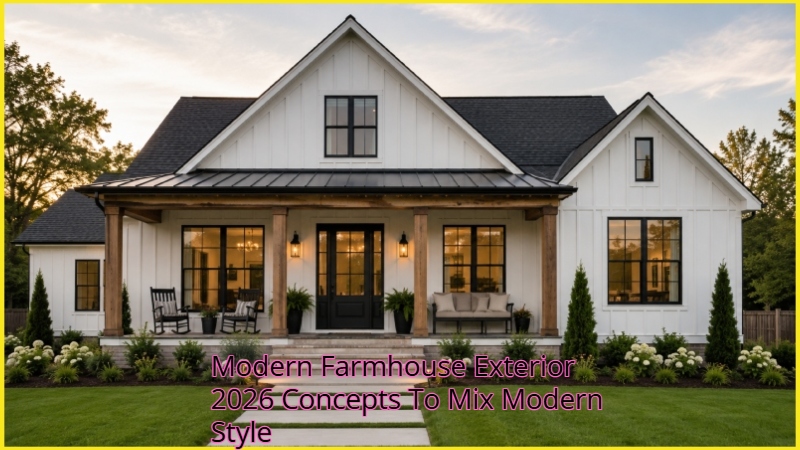
Today’s homeowners are seeking an exterior that is inviting, long-lasting for years to come and adds value to their property. This is one of the reasons the modern farmhouse exterior is still the king of renovation and new-home construction. Its clean lines, timeless materials, and well-balanced blend of rustic charm and contemporary design mean it’s so much more than a passing trend. “It’s about finding design elements that work with your architecture, climate, lifestyle and budget, and give your house its own distinctive personality.”
What Is a Modern Farmhouse Exterior
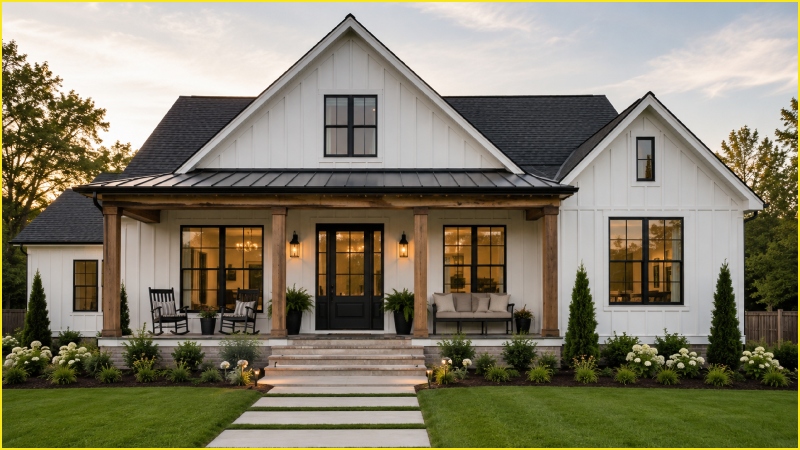
Before any paint goes on a wall, it helps to understand what’s actually happening architecturally. A modern farmhouse exterior borrows its bones from old working rural buildings — simple, rectangular footprints, steep gable roofs, and generous covered porches that once served a practical purpose: keeping mud off boots and rain off windows.
The Architectural DNA
The most recognizable feature is the mix of materials. Board-and-batten siding, with its clean vertical lines, typically covers the gable ends or the upper portion of the house, while a contrasting material — stone veneer, brick, or dark horizontal lap siding — anchors the lower section. It’s a layered look, and that layering is what separates a true modern farmhouse from a plain white box with black windows.
Rooflines matter just as much. A steep pitch, sometimes broken up with smaller gables or dormers, gives the home that unmistakable silhouette. Add a wraparound or partial porch with simple square or round columns, and the architectural language starts to click into place.
Old Farmhouse Charm, New-Build Precision
What truly defines the modern side of a modern farmhouse exterior is thoughtful design. Every detail is intentional, from symmetrical windows and crisp trim to durable materials that require less maintenance over time. While traditional farmhouses embraced natural imperfections, modern designs focus on clean lines and balanced proportions without losing their welcoming character. The result is a home that feels warm, timeless, and practical for today’s lifestyle.
Siding & Material Choices That Define the Look
When Sarah and Mark finally sat down with their contractor, the first real decision they had to make wasn’t paint color — it was siding.
Board-and-Batten: The Signature Look
Board-and-batten remains the material most associated with the style, and for good reason. The vertical planks create a rhythm across the façade that reads as clean and structured without feeling cold. It works especially well on gable ends, where it draws the eye upward and emphasizes the roofline.
Mixing Materials for Depth
The homes that photograph best — and hold up best over time — rarely rely on a single material. Pairing a metal roof with reclaimed brick, natural stone, or smooth stucco adds a layer of texture that flat siding alone can’t achieve. Sarah’s contractor suggested exactly this: board-and-batten up top, a stacked stone veneer along the base, and a dark standing-seam metal roof tying it all together. The result wasn’t just visually interesting — it also protected the lower part of the house, the section most exposed to splashback and moisture, with a material built to handle it.
The Black-and-White Formula (Still King)
If there’s one combination that defines the modern farmhouse exterior more than any other, it’s black trim against white or off-white siding. It’s simple, but it works because it does something clever with the eye — the contrast sharpens every architectural line on the house, making windows, columns, and rooflines look intentional rather than incidental. It suits everything from a tall two-story build to a single-level ranch like Sarah and Mark’s.
For their house, they went with a soft white body, black window frames, and a black front door. Nothing flashy. But the moment the black trim went up, neighbors started stopping to ask what changed. That’s the power of contrast done well.
Color Palettes Beyond Black and White
Not everyone wants stark black and white, and that’s perfectly fine — the style has room to breathe.
Warm Neutrals and Earthy Tones
Although black and white remains the signature farmhouse combination, many homeowners are choosing softer color palettes that blend naturally with the surrounding landscape. Warm white, cream, greige, taupe, and light beige create a clean yet welcoming appearance without feeling overly bold. These shades pair beautifully with natural wood, stone, and greenery, giving the home a timeless look that stays attractive through every season.
A Pop of Color at the Front Door
If a full repaint feels like too much, the front door is where a lot of homeowners choose to experiment. A classic wood door, or a sleek black steel one, can be swapped for a deep blue or forest green for a subtle twist that still respects the overall palette. It’s a small change, but it’s often the first thing a visitor notices walking up the porch steps.
Roofing Choices That Complete the Look
Roofing is where style and practicality really have to meet in the middle. Metal roofs have become something of a staple for the modern farmhouse aesthetic — they’re durable, energy-efficient, and give the home a sleek, low-maintenance silhouette that shingles can struggle to match.
But roofing choices shouldn’t be made on looks alone. A steep pitch that sheds snow beautifully in Vermont might not be the right call in a region that deals with high winds or intense afternoon sun. Climate and topography end up shaping the roofline just as much as personal taste does, so it’s worth having an honest conversation with a local contractor before locking in a design you saw on a home three states away.
Lighting, Landscaping, and Finishing Touches
Once the big structural decisions are made, it’s the smaller details that make an exterior feel finished rather than half-done.
Soffit Lighting and Architectural Accents
Soft lighting tucked under the eaves or along gables does two things at once — it highlights the architecture after dark and gives the whole house a warmer, more welcoming glow in the evening. It’s a small addition that a lot of homeowners skip, but it’s often what separates a good exterior from a genuinely inviting one.
Natural Wood for Warmth
Even in the cleanest, most contemporary version of this style, natural wood keeps showing up — on porch ceilings, garage doors, or accent beams near the entry. It adds texture and warmth that paint and metal alone can’t replicate, softening the house without pulling it away from its modern lines.
Common Mistakes Homeowners Make
Not every farmhouse renovation goes smoothly, and it’s worth talking honestly about where projects go wrong. The most common misstep is overcorrecting in one direction or the other. Some homeowners lean so heavily into reclaimed wood and rustic textures that the house starts to feel dated rather than charming — more theme park than farmhouse. Others go the opposite way, stripping everything down to flat white walls and black trim with no texture at all, and end up with a house that looks sharp in photos but feels a little hollow to actually live in. The homes that age well tend to sit in the middle — enough texture to feel warm, enough restraint to feel current.
Another mistake is choosing materials purely for the photo. A stone veneer that looks stunning in a listing photo but wasn’t rated for a humid climate will cause problems within a few years. This is where it pays to loop in a local contractor early rather than after the materials are already ordered.
Budget-Friendly Ways to Get the Look
Not every homeowner is ready for a full siding replacement, and that’s okay. A lot of the modern farmhouse look can be achieved in stages. Repainting the trim black while keeping existing siding is often enough to shift the whole feel of a house. Swapping out dated light fixtures for simple black lantern-style sconces, replacing a worn front door, or adding a few wood accents near the entry can each move a home noticeably closer to the look without triggering a full renovation budget. Click here for more Information.
Sarah and Mark actually started here. Before committing to new siding, they repainted their trim, changed their porch lighting, and replaced the front door. It wasn’t the full transformation yet, but it was enough to prove to themselves that the direction was right before spending on the bigger materials.
My Final Thoughts About Modern Farmhouse Exterior